Category: Human Rights

Discussions on human rights, with a particular focus on gender identity and sexual orientation.

  • Sex Work and the Church

    Sex Work and the Church

    I recited the following at our 5 pm church service, which brings in a different guest to speak every week. The lectionary reading that day was Luke 20:27-38.

    One of the things that I like about coming to a church like ours is hearing people’s stories. Every one of you has something to share. Stories are important. I’ve seen them subdue the impulse to ridicule, fear, and avoid those who’ve had a different life journey.

    No one is owed stories. If sharing a story requires vulnerability from the speaker, then the recipients too must demonstrate equal care in listening. This has not been the case in a lot of churches when it comes to the stories of women, indigenous members, sexual and gender diverse Christians and/or those who have experienced homelessness. And I would add to that sex workers. Or as we have called them from our readings on Sunday mornings, whores, prostitutes and sexually immoral.

    (more…)
  • Saying it with a smile

    Saying it with a smile

    Christian white supremacy has been part of the fabric of Turtle Island since colonization. The short history of Canada includes the genocide of Indigenous people, concentration camps for those of Japanese descent, and legislated exclusion of those who weren’t white from immigration. This isn’t the distant past; there are many alive today who have been personally impacted by these policies.

    Political discourse had been slow to acknowledge these wrongs but in the mid-2010’s there was a return to Christian white supremacy talking points following a global wave of neo-nationalist sentiment. Of note was the Conservative anti-Muslim rhetoric of the 2015 Canadian federal election, the anti-Muslim rhetoric and actions in the campaign and subsequent presidency of Donald Trump, and the implementation of Quebec’s anti-Muslim niqab ban.

    The end result has been that more Canadians today have anti-immigrant sentiments than five years ago, that 37% view immigration as a threat to white Canadians, and that 68% of Canadians want a ban on Muslim religious wear. Meanwhile in 2017, a white Canadian murdered six and injured nineteen at a mosque in Quebec City.

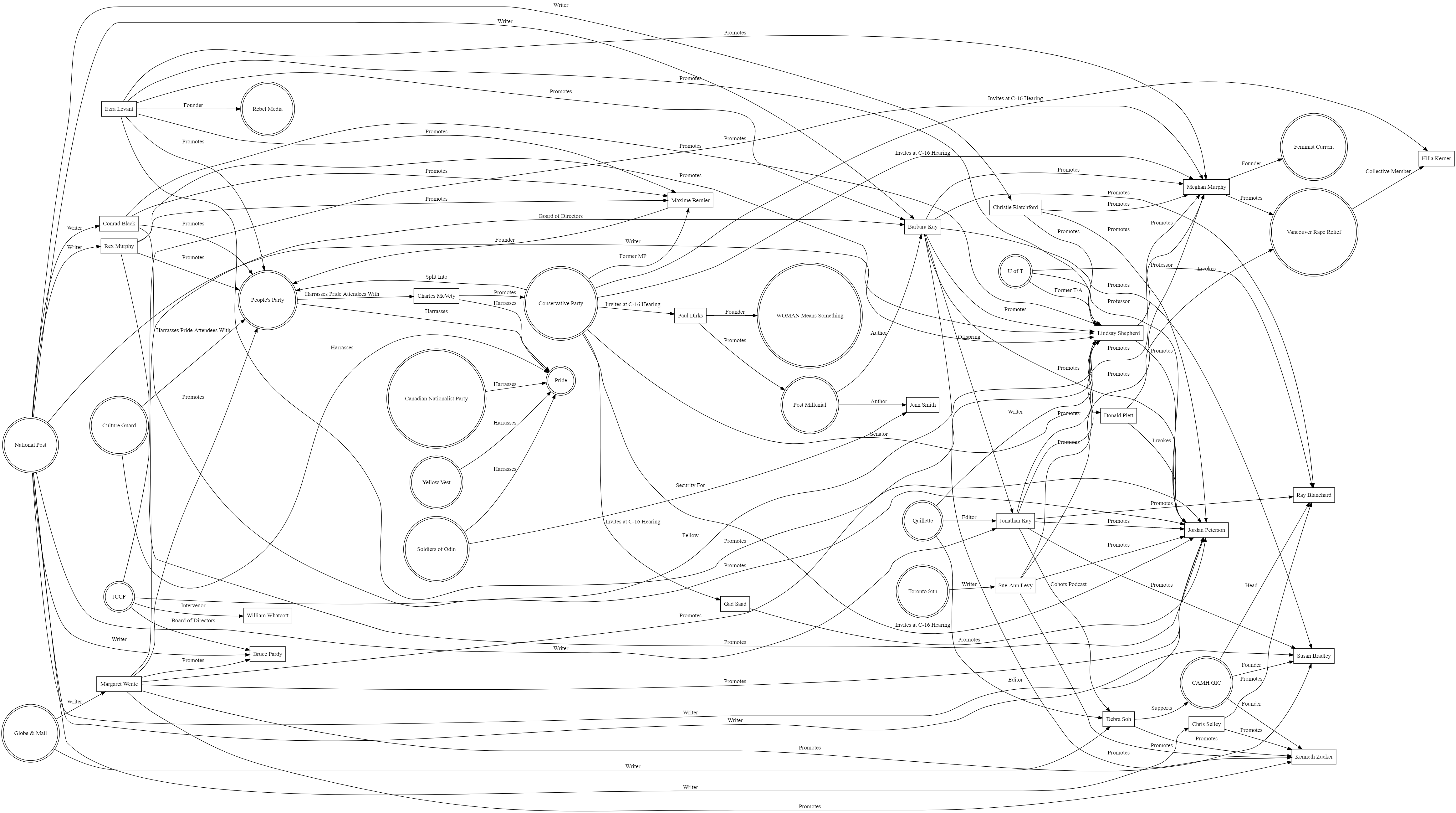
    Corresponding with this rhetoric has been an explosion of Christian white supremacist groups:

    Three political parties have also been formed and are running in the 2019 Canadian federal election:

    There was a further entrenchment of Christian white supremacist views in the political discourse when the People’s Party of Canada was invited to the leader’s debate. The official platform for the People’s Party of Canada states that they would:

    Founding party members include a former leader of a Neo-Nazi group, a former member of Soldiers of Odin, and a Pegida Canada official. The party’s leader, Maxime Bernier, has also been promoting anti-Muslim conspiracy theories about “infiltration”, defended posing for photos with members of the ultra-nationalist Northern Guard, and refused to denounce the Islamophobic attack that killed fifty-one worshipers at a mosque in Christchurch.

    The decision to give the People’s Party a seat at the nationally aired debates will by association normalize the racist, Islamophobic and transphobic views espoused by the party. This will increase the number of violent acts against the targeted communities.

    It was a mistake to invite the People’s Party to the leader’s debate. What I want to examine in this article is why this outcome was deemed acceptable in the first place.

    It’s about perception

    One way of conceptualizing the mechanics of prejudice is with the following pyramid:

    In this model each layer enables the layer above it; the more widespread the acts in one layer, the greater the likelihood of acts in the layer above. There’s also a point in time in which each layer becomes socially unacceptable.

    It’s arguable where each political party stands in this pyramid, although all are represented. What I can say with certainty is that Christian white supremacist groups dabble in the upper two tranches, and their contemporaries on the political side seem to be vying for the layer below. That said, the ultimate political aspirations of the nationalist parties is quite clear: the elimination of visible Muslims and trans people from Canada.

    There exists an opportunity right now to curtail the spread of these views. This would require the Leaders’ Debate Commission and media organisations to decline giving white supremacists a platform and lend credibility to their views. The People’s Party is still relatively obscure, the project of a Conservative defector following a failed leadership bid. It has no seats in Parliament. If mainstream organisations keep breathing life into these views, however, there runs the risk of the People’s Party becoming too big to ignore.

    Yet organizations have chosen to support the People’s Party. I posit that this is for reasons related to perception: the image of Maxime Bernier and the appearance of fairness.

    Let’s start with Maxime Bernier. The imagery disseminated of him is largely indistinguishable from that of the leaders of mainline parties. Contrast that with the visuals of the leader for the Nationalist Party which is more aligned with what white people imagine a white supremacist to look like.

    When Maxime Bernier is interviewed on television, he has a calm disposition, his tone is soft, he is jovial, and affirms his points using language familiar to mainline politicians. He appears respectable.

    That leads to the perception of fairness. The decision to invite Bernier to the national debate stage was at the discretion of the Leaders’ Debates Commission. They said that it was based on 30% of constituents in two electoral ridings stating they were considering voting for the People’s Party, enough for the party to potentially win a seat. I speculate that the number was this high among constituents because unlike leaders of other fringe parties Bernier appears respectable. I suspect that the Leader’s Debate Commission then decided upon this outcome for the same reason. This was subsequently framed in the media as a fair decision.

    I argue that this respectability and fairness is based on an incomplete picture rooted in white Christian sensibilities. If those were expanded to be inclusive of Muslim and trans viewpoints, I don’t believe that Maxime Bernier and the People’s Party would appear respectful. His candidates are openly harassing Muslim Canadians and members of the 2SLGBTQ community. They are unabashedly racist. His own rhetoric peddles in fear mongering and conspiracies.

    In the end, saying things with a smile goes a long way towards legitimizing what’s uttered with those who aren’t targeted by the thinly-veiled vitriol. Mainstream organisations that provide a platforms already vet their invitees based on perceptions of respectability as they don’t wish to place their own organisation in disrepute. These organisations must be representative of more than white Christian viewpoints when making such judgments, or they inadvertently become amplifiers of this Christian white supremacy.

  • The Canadian media’s targeted harassment of queer and trans individuals

    The Canadian media’s targeted harassment of queer and trans individuals

    Jessica Yaniv was refused service at over a dozen beauty salons in B.C. because she is trans:

    [Yaniv] says many of the estheticians advertised themselves as offering arm, leg, and pubic hair waxing for either male or female customers.

    However, when Yaniv informed them she was transgender she says she was suddenly refused appointments outright, or that the estheticians made excuses for no longer being able to perform the service.

    Her stories of discrimination at the hands of estheticians would be familiar to any trans woman who has been out for a while. What sets Yaniv apart is that she challenged these wrongs and went before the B.C. Human Rights Tribunal.

    This put her in the cross-hairs of Canadian media.

    The language used by The National Post, The Globe and Mail, and the Sun about Yaniv have themes familiar to trans people: mockery, derision, and focus on genitalia. “Bizarro” declares the Globe and Mail, “laughing stock” says the National Post, “balls to that” headlines the Sun with its genitalia pun.

    These news organisations abdicated their responsibility to give a measured analysis and chose to describe a living person with cruel and dehumanizing language. Their staff encouraged readers to ridicule and shame Jessica Yaniv.

    The insensitive coverage spread internationally. Britain’s The Guardian, ironically with its Pride-themed logo, posted a copy of the “laughing stock” article. Australia’s Daily Telegraph published an unflattering editorial cartoon of Yaniv. The American Federalist called Yaniv a man, a familiar refrain to trans women.

    Meanwhile, on YouTube, the top results are all videos lambasting Jessica Yaniv:

    On Twitter the hashtag #waxmyballs is trending while a top result being the National Post’s article:

    Keep in mind that this onslaught is all directed at a single individual. It’s a lot for any one person to endure. Yaniv has since received death threats in person. All this because she brought a case of discrimination before a tribunal after being denied service over a dozen times. It is a disproportionate response created by the worst impulses of individuals working for news publishers in Canada.

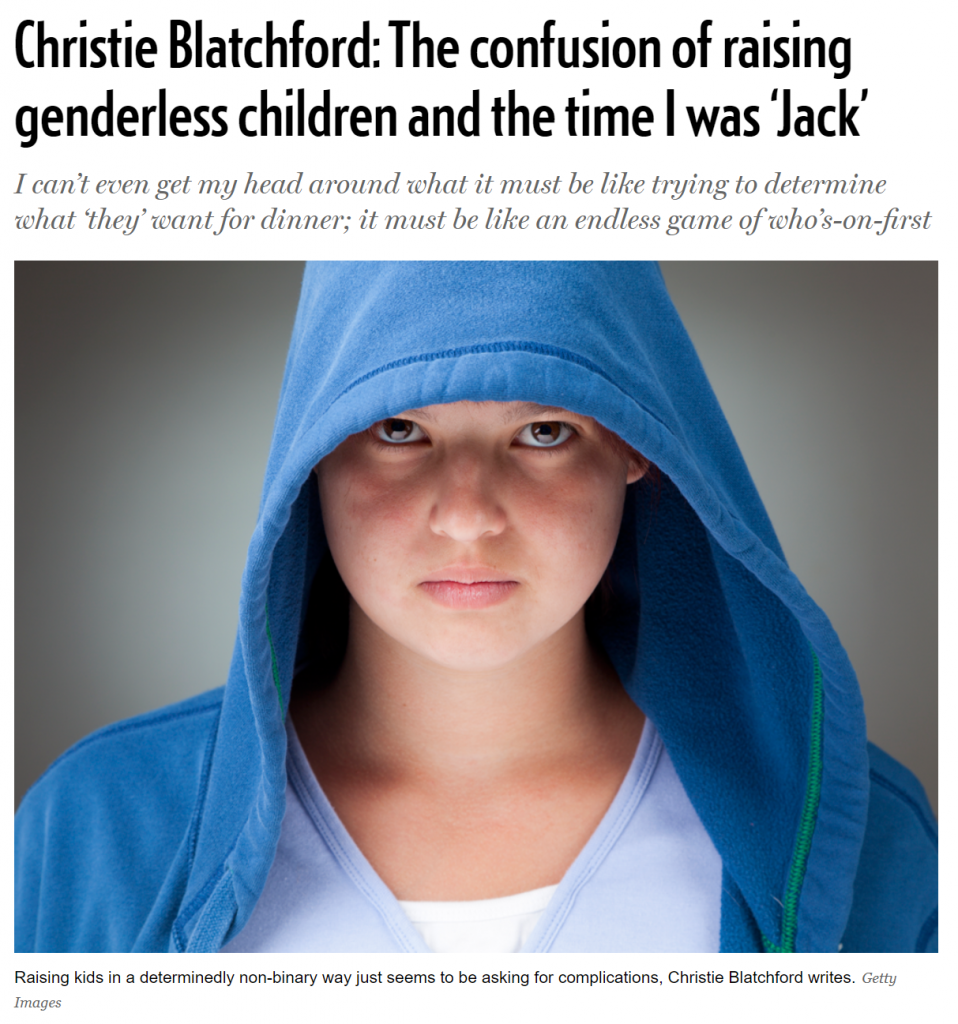
    It is reminiscent of the furor a few years ago, where a Toronto family didn’t disclose gender of their child. The Canadian media found out and targeted the young family in a similarly cruel fashion, with the family then making international news, and receiving an overwhelming vitriolic response on social media.

    Online poll from the Toronto Star

    The family with their young children were harassed on the street:

    When the Star first covered their decision, public outcry was fast and furious. People delivered angry letters to the family’s door. Drivers slowed to shout “Boy!” from their windows at Storm, as the family was en route to the pool or the library.

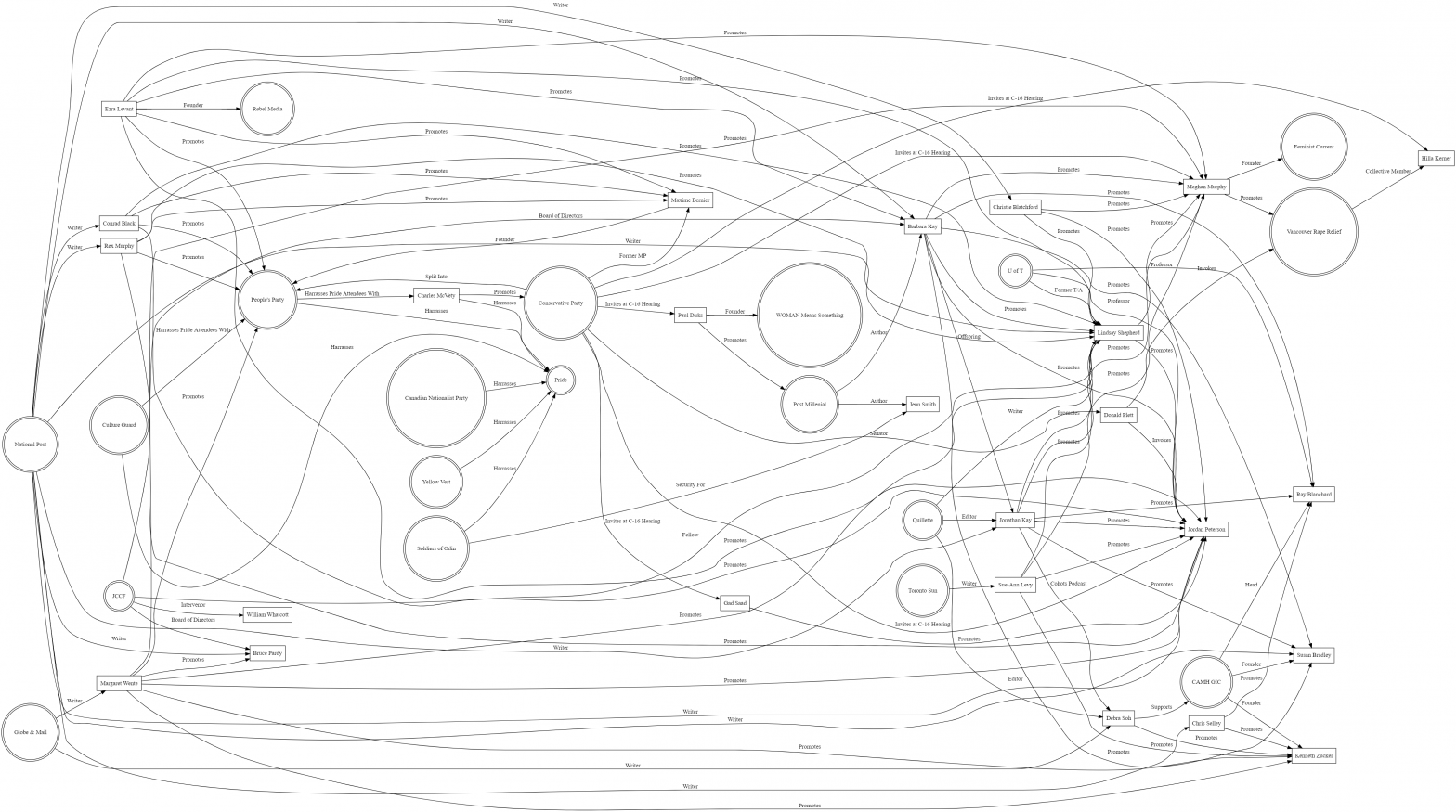
    News organisations such as The Globe and Mail and National Post aren’t reporting on transphobia, they are active instigators of it. Their actions made the lives of the specific trans individuals they targeted hell.

    Their writers show no empathy because gender diverse individuals are stand-ins for trans rights as a whole. The authors use these events as a conduit to communicate their dislike for the increasing acceptance of trans people. But for those queer and trans people whose names are used without their consent, it means having their young child yelled at by strangers on the street. It means receiving death threats on public transit. It means violence.

    This has got to stop. It’s not just the authors who are accountable here, but the chain of cis people inside these news organisations who okay’ed their platform targeting these individuals with such vitriol. Who followed on by publishing more such pieces. Their platforms create movements that harass queer and trans people.

    Media organizations targeting trans individuals has a long history.

    There’s a pattern here. These organisations vilify gender diverse people whose existence or actions challenge norms, no matter how insignificant. How necessary was it for a news organisation in Britain to say that a newborn in Toronto was a “freak” because their gender wasn’t disclosed at birth?

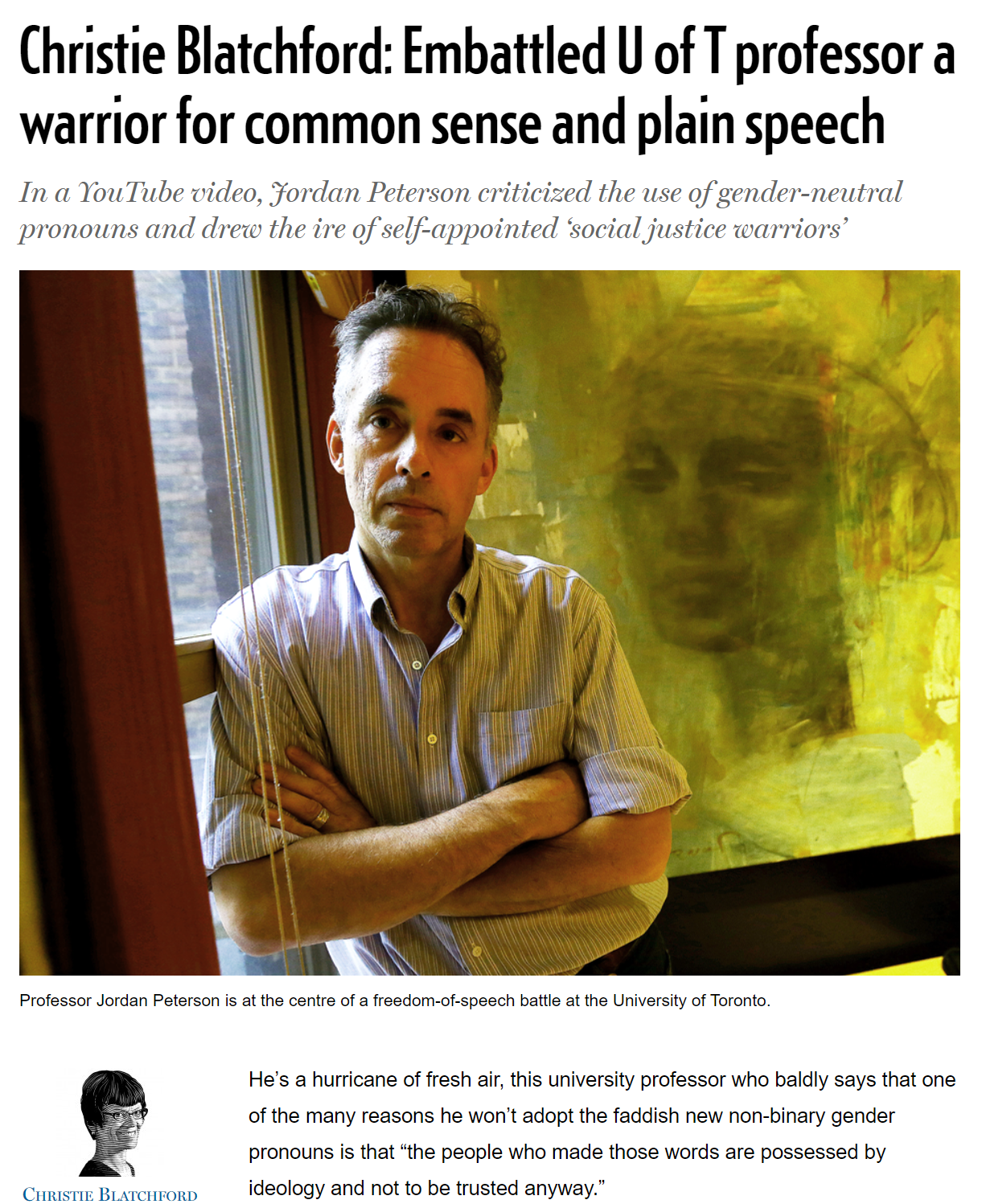
    Conversely these same organisations make martyrs of cisgender people who have been publicly challenged by trans people – the Jordan Petersons and Kenneth Zuckermans of the world. Much the same, these individuals are used as proxies to communicate the desire for the world to remain as it was: without cis people opening up spaces to gender diversity.

    Companies that produce the Globe and Mail, National Post, and the Sun are generating ad revenue from their writers using this incendiary language. In the current social climate, this transphobia is profitable. But these organisations are culpable for the violence they have fostered, and their role needs to be openly recognized in our discourse. We must stop perceiving news organisation as neutral observers and recognize that society’s prejudice manifest there as it does everywhere.

  • Anglican Church of Canada votes against recognizing same-sex marriage at General Synod

    Anglican Church of Canada votes against recognizing same-sex marriage at General Synod

    The results disseminated through Twitter seconds ahead of the live stream. My friend looked at their phone “Oh fuck – Connor says ‘I’m sorry’.” A young adult in the room with us started to cry. The video feed caught up. We heard weeping over the computer speakers from the youth at General Synod.

    Though 80% of laity, and 73% of clergy had approved the changes to the marriage canon to recognize same-sex marriage in the Anglican church, the 66% threshold required of the bishops had failed by two votes.

    My mind darted to the queer and trans youth who had gone up during the preceding debate to plead their worth in a display of great vulnerability. I thought of the older people who followed them, never recognizing the youth as one of their own or their words as worthy of contemplation. They began with pronouncements of “we welcome GTBL people but…” and went on to cite ex-gays and angrily claiming the injustice of the dwindling appetite for their message of exclusion.

    These are the voices the vote favoured. Not the youth. Not the pastor who shared the collateral damage of such exclusion when he had to explain to his young child why his husband wasn’t welcome at the Lambeth Conference like all the other parents.

    A comforting hand came to mine, but to be honest, I was fine. I was habituated to hearing grown men and women demean people like me and witnessing that kind of ignorance prevail time after time. What I wasn’t used to was the anguish of the young queers whose hearts had yet to be covered with emotional scars. Their pain from this rejection was palpable. For some of them, same-sex marriage had been legal in Canada since before they were born. This wasn’t some theological exercise that had emerged in their later years. It was a vote about their worth in a debate that had gone on their entire existence.

    This was not the answer they deserved.

    For those fourteen bishops who voted against this canonical amendment, this may well have been a Pyrrhic victory. That same-sex marriages went ahead across diocese in this land three years ago gave hope in the midst of grief. But those tremendously important gestures are being eclipsed by this conclusion. The message it sends is amplified by the homophobia and transphobia that is so prominent in other Christian denominations as well as evidently our own.

    As Noah Hermes wrote on Twitter:

    I just keep thinking, I wonder if these Bishops who voted no are the ones who are constantly complaining about church growth? About lack of young people in their pews? About how we need to evangelize more? Well bishops, you had your chance here and you blew it.

    I have the privilege of being involved in young adult and LGBTQ ministries, and young people don’t want to go to a church where they can’t bring their queer friend. Queer people have been traumatized at the hands of the church and yearning for a spiritual home.

    Because though this is just a decision about marriage, and individual dioceses can still bless same sex unions, making a decision like this tells LGBTQ people that we are not welcome, by not including us in every aspect of ministry you are telling us we are less than.

    U want ur church to live? Great! Bc I know queers who are more devout, caring, and committed to living out the gospel than most str8 Christians! But guess what they can’t come to church because they’re too traumatized by this institution that constantly invalidates them.

    I conclude with the words of one of the queer and trans youth that spoke at General Synod before the vote took place:

    We have been called in countless passages of the Bible to love one another as God has loved us: unconditionally. Not the type of love that includes a but or if like how my cousin said that she would love me if I went to conversion therapy. Yeah that’s not love. Love is simply I love you. Period.

    How can we claim to love our neighbour by denying them the right to one of our greatest sacraments. The answer is that we can’t. We have a choice today to peel off old bark, as trees do, to grow into something beautiful and new, or to remain in our old traditions that contribute to the marginalization and oppression of people in our community and around the world.

    We will not have unity in our church as long as we marginalize and oppress a large group of Christians. Nobody should ever feel unsafe or scared to come to a place of worship. No one should feel unsafe to come to a place of worship.

    To my LGBTQ2+ siblings and family,

    Remember that we are created in the image and the likeness of God, and no matter what happens tonight, we are all beloved children of God and I hope that today our love will be affirmed by the churches we call home.

    Thank you.

    Addendum: I wanted to speak to the pain of the youth who participated in Synod in this article. However, here’s a thing to note through this same vote – more Anglican laity (80%) and roughly as many Anglican clergy (73%) supported same-sex marriage than Canadians as a whole (74%). Even the bishops’ 62% support is ahead of where Canadians as a whole were at in 2005 (42%).

  • Nationalist groups and the intimidation of gender and sexual minorities in Canada

    Nationalist groups and the intimidation of gender and sexual minorities in Canada

    This article has been updated to include events of the summer.

    Since the late nineties, organized antagonists of gender and sexual minorities were largely Christians or affiliated with major conservative political parties. The dynamics have changed. In the past few years, there’s been a rise of nationalist groups across Canada and they have been inserting themselves in spaces created by these anti-gay and anti-trans voices. They are going to Pride with the intent to intimidate and harass gender and sexual minorities, as well as attending events that advocate to institutionalize the oppression of these minorities.

    In June 2019, nationalists under the banner of Yellow Vest went to the Hamilton Pride event. Some had body armor. They joined up with the anti-gay Christians that had showed up to harass members of the gender and sexually diverse community. In response, queer people put up a black cloth fence and blew whistles to drown out the hateful rhetoric. The nationalists then attacked with punches.

    A week later in Toronto, men wearing shirts that said “Canadian Nationalist Party” and Christian t-shirts attacked people in the Eaton Centre during the Dyke March. The men were shouting anti-gay slurs and saying they were going to the gay village in Toronto. The timing isn’t a coincidence. One of the attackers in Toronto is the man seen with the body armor in the photo from the attack at Hamilton Pride above.

    A man wearing a helmet with a shirt that says “Jesus Christ is King of Kings Lord of Lords” goes to punch a queer person in the Eaton Centre. The man behind him with the helmet and body armor is the same one pictured attacking people during Hamilton Pride.

    In August 2019, a preacher and a Yellow Vest member who was at the Hamilton and Toronto attacks harassed children and young families at Pride storytelling event in Ottawa.

    A homophobic preacher (black clothes, standing) and a Yellow Vest member (right, blue) harass children and young families at a Pride storytelling event in Ottawa.
    A homophobic preacher (black clothes, standing) and a Yellow Vest member (right, blue) harass children and young families at a Pride storytelling event in Ottawa.

    Meanwhile in June 2019, members of the Soldiers of Odin were front and center at an anti-trans rally in Vancouver. The Soldiers of Odin is an nationalist group founded by a self-declared neo-Nazi in Finland in 2015 and developed multiple chapters in Canada by the summer of 2016. The rally was to oppose SOGI 123 which is a set of policies, resources and curriculum to create welcoming schools for students with diverse sexual orientations and gender identities.

    Soldiers of Odin visible by the “S.O.D.” patch at an anti-trans rally in Vancouver. The speaker to their right runs the website Transanity.

    Again in June 2019, the Christian group Culture Guard crashed a Pride flag raising in Surrey. They used loud speakers to harass those attending. Joining them were members of Canada’s other nascent nationalist party, the People’s Party of Canada.

    A member of the People’s Party uses a loud speaker to harass those attending a Pride flag raising in Surrey.

    Then in May 2019 on Vancouver Island, the Soldiers of Odin attended the event “The Erosion of Freedom: How transgender politics in school and society is undermining our freedom and harming women and children”, to act as the body guards for its presenter.

    An advertisement for the anti-trans event on its presenter’s website, Transsanity.

    In September 2019, a former candidate for the nationalist Canadian Constituents’ Party organized the anti-trans “No Radical Gender Ideology” rally in Ottawa. Speakers included a representative from the Christian group Campaign Life Coalition who linked trans-inclusiveness with pedophilia, Bolshevik Russia, and Nazi Germany.

    Organizer of the No Radical Gender Ideology rally speaking at the event in Ottawa.

    Also in September 2019, an anti-LGBTQ rally organised by the evangelicals David Lynn and Charles McVety made its way through the heart of of Toronto’s gay village. McVety has advocated on his television show that homosexuals prey on children while David Lynn was previously arrested for harassing individuals in the village. Supporters for the People’s Party were prominently visible, leading the subsequent march with a large banner.

    Anti-LGBTQ march in the heart of Toronto’s gay village, with a banner for the People’s Party at the front.

    The introduction of nationalists in Canada is new and it makes the situation more hostile to gender and sexual minorities in attendance. But it’s not a radical departure from how things were already. Even without nationalists at their side, conservatives and Christians have been disrupting events intended for gender and sexual minorities. For Haldimand-Norfolk Pride, they installed themselves in front of the stage with a loudspeaker. In Ottawa, the same group protested WinterPride, while previously another individual disrupted a support group for parents of trans youth, and another bunch harassed families during a picnic at Pride.

    Homophobic Christians disrupting the Haldimand-Norfolk Pride in May 2018. Note the handheld loudspeaker.

    Google Trends indicates that interest in nationalist groups in Canada such as the Proud Boys and Soldiers of Odin started in the 2016-2017 time frame. This matches Donald Trump’s presidency and Trump hats were visible in both the Hamilton and Vancouver events mentioned at the start of this article. The Canadian Nationalist Party was founded in 2017. The People’s Party of Canada was founded in 2018.

    This rise, however, should not be cause for alarm. Before nationalists, newspapers in Canada were still advocating for the removal of trans people from public life. Politicians were still comparing trans people to sexual predators. Movies and television were still ostracizing trans women. Youth were still being kicked out of their homes for their gender identity or sexual orientation. Trans people were still being harassed and assaulted by strangers in public places. Antagonists were already disrupting events for gender and sexual minorities. That a handful of entitled young white men and politicians have now decided to join the bandwagon doesn’t change things much.

    That the Canadian Nationalist Party has an official video saying homosexuality shouldn’t be normalized and that the People’s Party of Canada has it in their official platform to repeal federal protections on the basis of gender identity and gender expression just a continuation of the positioning the Conservative Party of Canada has taken.

    An official video from the Canadian Nationalist Party saying that being gay shouldn’t be normalized, same-sex marriage should be put to a referendum, and that Pride parades should be defunded.

    Also keep in mind that it’s really only a small core group of antagonists at the heart of all of these events. It’s the same few nationalists that attacked people during the Toronto and Hamilton Pride events and that harassed children and young families at the Ottawa Pride event. It’s the same group of Christians that crashed Pride in Ottawa, Hamilton, Haldimand-Norfolk. It’s the same speaker at the anti-trans rally in Vancouver and who did anti-SOGI talks on Vancouver Island. These antagonists seem bigger than they are because they go to so many events and physically impose themselves. But at the end of the day, they are a fringe group vastly outnumbered by the gender and sexual minorities they are harassing.

    Still, this doesn’t negate the harm they are able to accomplish. There needs to be an organized response to protect those who attend the events with a focus on minimizing the impact on the participants. This means blocking harmful messaging and discouraging conflict escalation. To that end, The 519’s mobilization kit is a welcome initiative, as was the noise makers and cloth wall seen used at Hamilton Pride. Calgary Pride is an example of the tactics learned from Hamilton in action.

    Twitter post from Calgary Pride.

    There also, however, needs to be a response on behalf of the media and politicians. In particular, they must acknowledge that this white Christian nationalist moment is harmful. Gender and sexual minorities shouldn’t have to be alone in this. They must also recognize that giving these white nationalists a platform is a choice that bridges the gap to the mainstream.