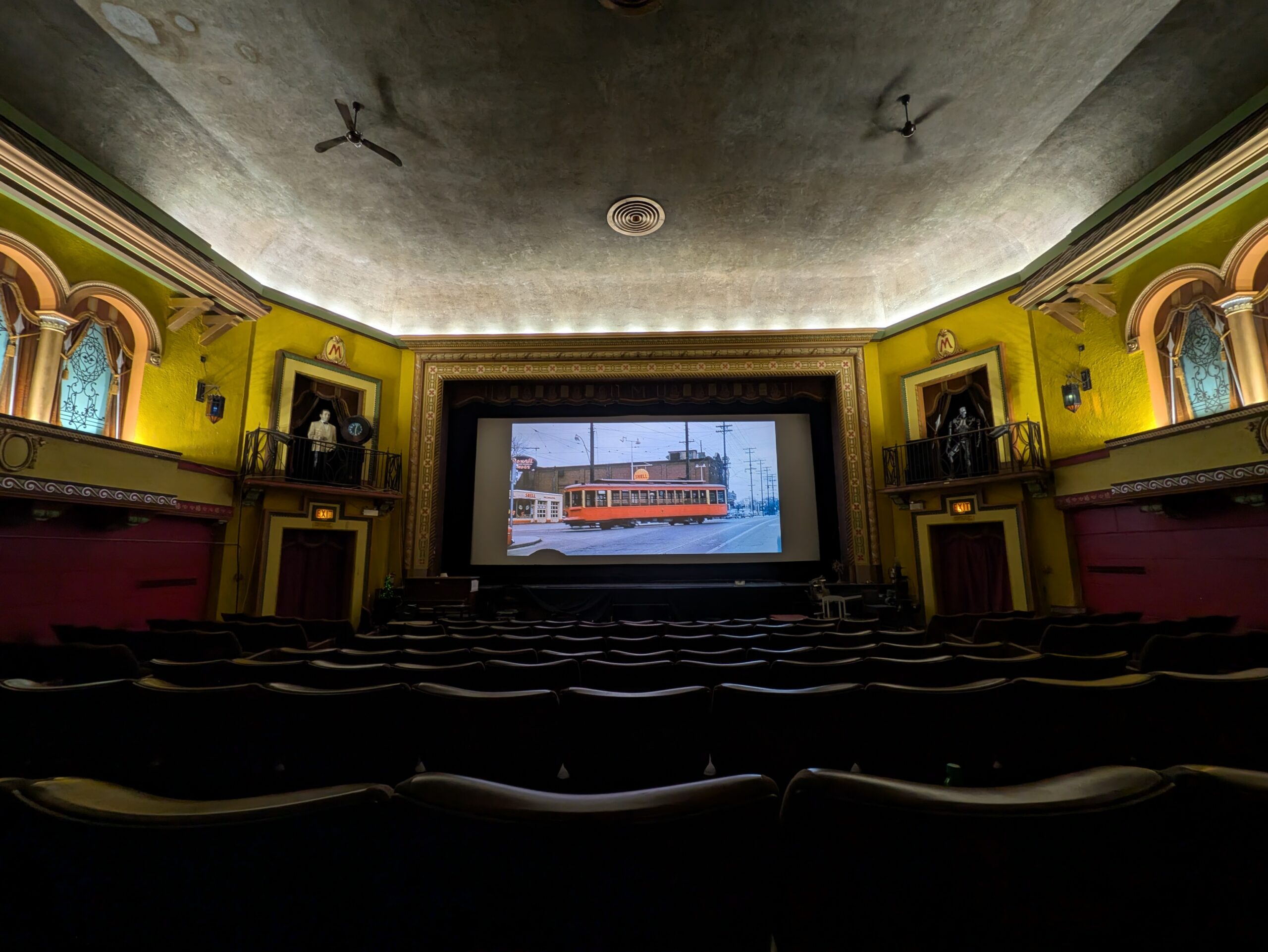
The film’s protagonist arrives home to write a letter.
He attempts to switch the lights; only they won’t turn on. Maybe the firmware on the smart lights crashed again, maybe one of the servers involved is down, maybe the company has sunset support to focus on new product lines, maybe the router needs a reboot.
The protagonist, in the dark, goes to their computer. After passing through a bunch of ads in Windows to start the word processor, it too won’t work. They need to renew the Office 360 account.
Fine, they load up Google Docs. After writing it all, they go to print. It won’t do it. They check the ink. Full. There’s a notification they missed: they need to pay for a subcription to HP.
Exhausted, they start chores. The Roomba has a red LED; it won’t start. They lay down on the couch, defeated. The smart watch is low on juice and won’t tell the time. They turn on the television, and an outage means YouTube won’t let them log in.
If someone pre-2006 watched this in theaters, they would laugh. It would just be so absurd.
Features over reliability
There’s three big trends in tech that brought us here. The first was the philosophy “break things and move fast“.
The idea being that when it came to consumer tech in particular, features moved product more than reliability. Therefore, the financial incentive was to prioritize adding more bullet points on a sales pitch rather than spending time on hardening the existing features. Breaking more was an acceptable outcome.
But with modern products dependent on a chain of servers operated by a myriad of companies, that philosophy meant that every link was increasingly susceptible to failure.
Whereas before any misbehaviour was limited to a single device, now it could propagate throughout the home.
Recurring revenue over practicality
The second big trend was to shift away from up-front costs to develop a product, which were then sold at a fixed price for use in perpetuity, to a subscription model.
Accompanying this was shifting a product’s functioning away from being self-contained on-premises to being dependent on company run servers, though some of that off-loading was imposed as a means to justify this new revenue model.
So for example, Adobe made their image/video editor a subscription model, as did Microsoft with its office suite. Dash cameras, doorbells, printers, thermostats, alarm clocks, game consoles, etc. all shifted to such a model.
No one wanted to reinvent the wheel, so each of these in being network dependent also became dependent on a chain of unreliable products from other companies.
Tech startups making everything
That brings about the third and final trend, which is that everything is being made by tech companies and their philosophy.
Doorbells – once a simple button that interrupts a circuit – are now made smart with an app and a camera. Counter top kitchen appliances are now smart and connected to the network to download recipes, for a subscription. Alarm clocks come with downloadable jingles to wake you up to, also for a monthly fee. Self-directed language training is now in apps, that again, are subscription based rather than books and CDs.
So it’s not just that the things made by tech companies are more frail, it’s that tech companies are eating up entire categories of appliances and things from companies that had different priorities. No one could get away in the old days with a doorbell that didn’t work some of the time, or a kitchen top appliance that didn’t work some of the time, etc. But with those same products from tech companies, people have been conditioned to accept it may not work.
There’s another element to tech companies producing these things we use, which is enshitification. Reducing costs to remain competitive is a familiar trend for many companies but this is on another level. The initial experience that people got with tech company products was often subsidized with investor funds. When investors later wants returns, tech companies then rush to exploit customer dependence for cash. The alternatives no longer being commonplace, most customers begrudgingly accept it. The old model of making customers happy, or even the product good, is dead.
Retro tech as a path to sanity
This change did not happen all at once. It really kicked off with the arrival of smart phones and the proliferation of broadband.
Smart phones started the trend of offloading product functionality of physical devices to apps, with servers to bind them. The proliferation of broadband made subscription-only models that depended on always-on internet connections palatable to companies. The unreliability that this all introduced entered our lives gradually. People buying into the superficial selling points had them replace reliable devices from the unreliable ones produced by tech companies, driving the former companies out of business.
Embracing vintage tech has been for me a breath of fresh air. I have old school solar-powered watches that always tell the time. I have books and typewriters that all work as advertised. I have a retro console.
I got rid of all my smart tech safe for my phone, which is unfortunately a minimum requirement to operate in a 2026 world. My TV has some smarts too, but when it fails, I have Blu Rays and a radio.
It doesn’t have to be like this. There’s a number of technologies that are way better today, like warm LED lighting, portable solar panels, flat-screen televisions, 3d printers, etc. I think with some regulation to prevent everything from being landfill after a few years, we could get to a place where we reach dependability, but it won’t happen with consumer preference alone.