[Yaniv] says many of the estheticians advertised themselves as offering arm, leg, and pubic hair waxing for either male or female customers.
However, when Yaniv informed them she was transgender she says she was suddenly refused appointments outright, or that the estheticians made excuses for no longer being able to perform the service.
Her stories of discrimination at the hands of estheticians would be familiar to any trans woman who has been out for a while. What sets Yaniv apart is that she challenged these wrongs and went before the B.C. Human Rights Tribunal.
This put her in the cross-hairs of Canadian media.
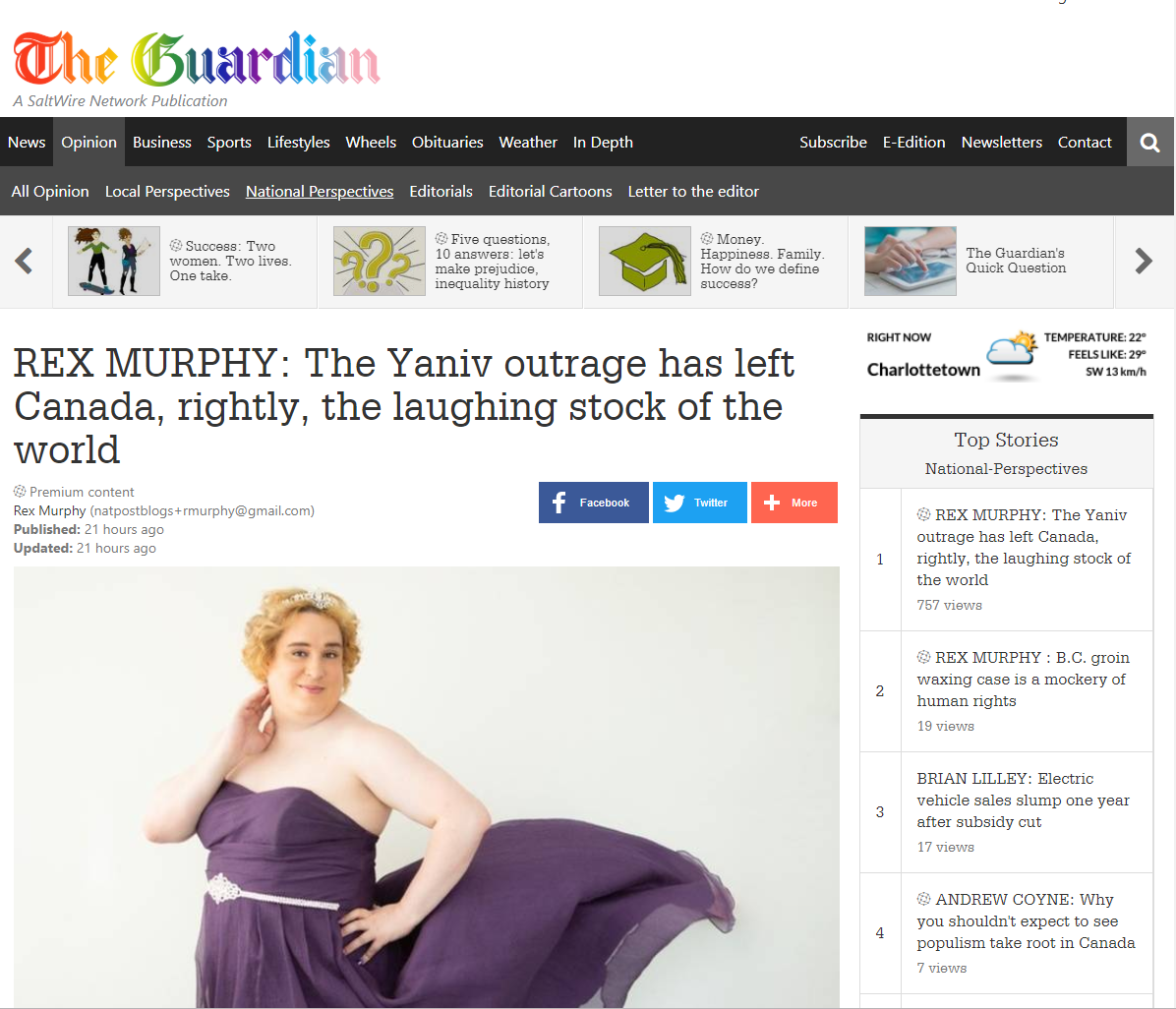
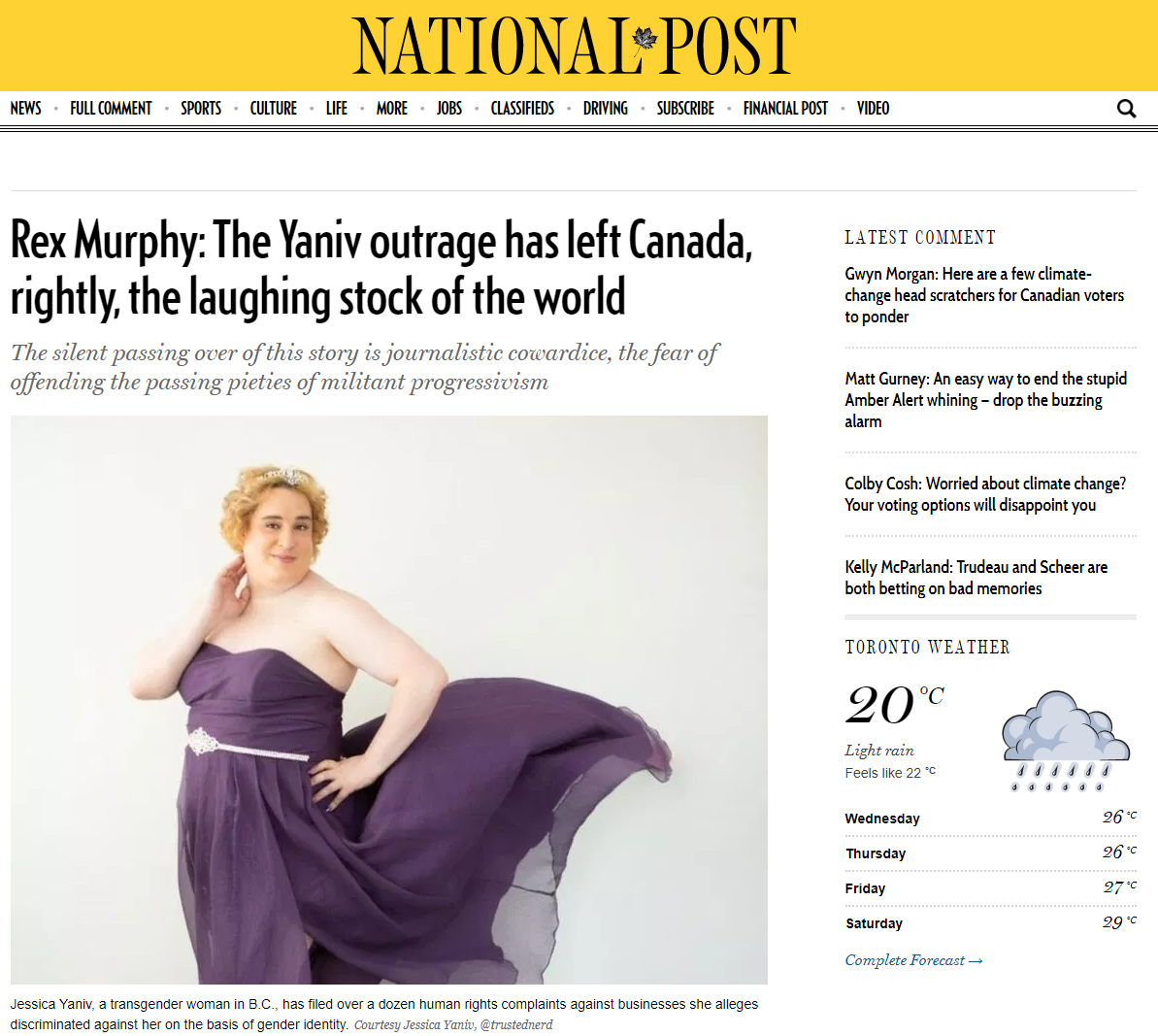
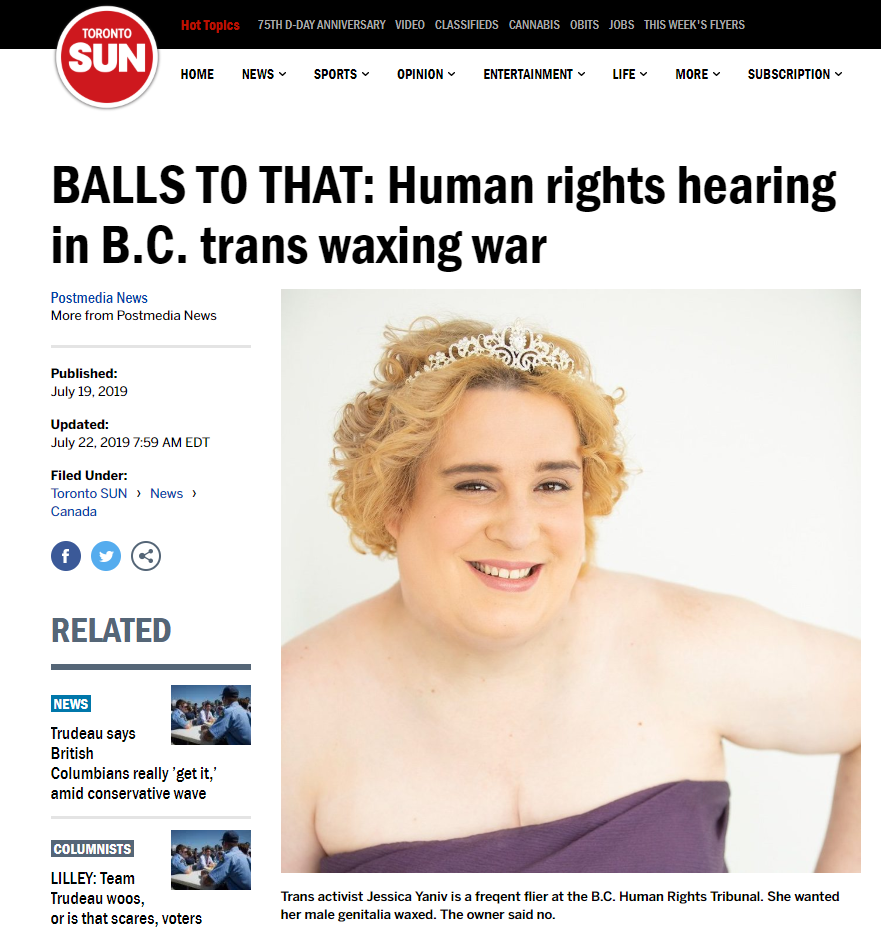
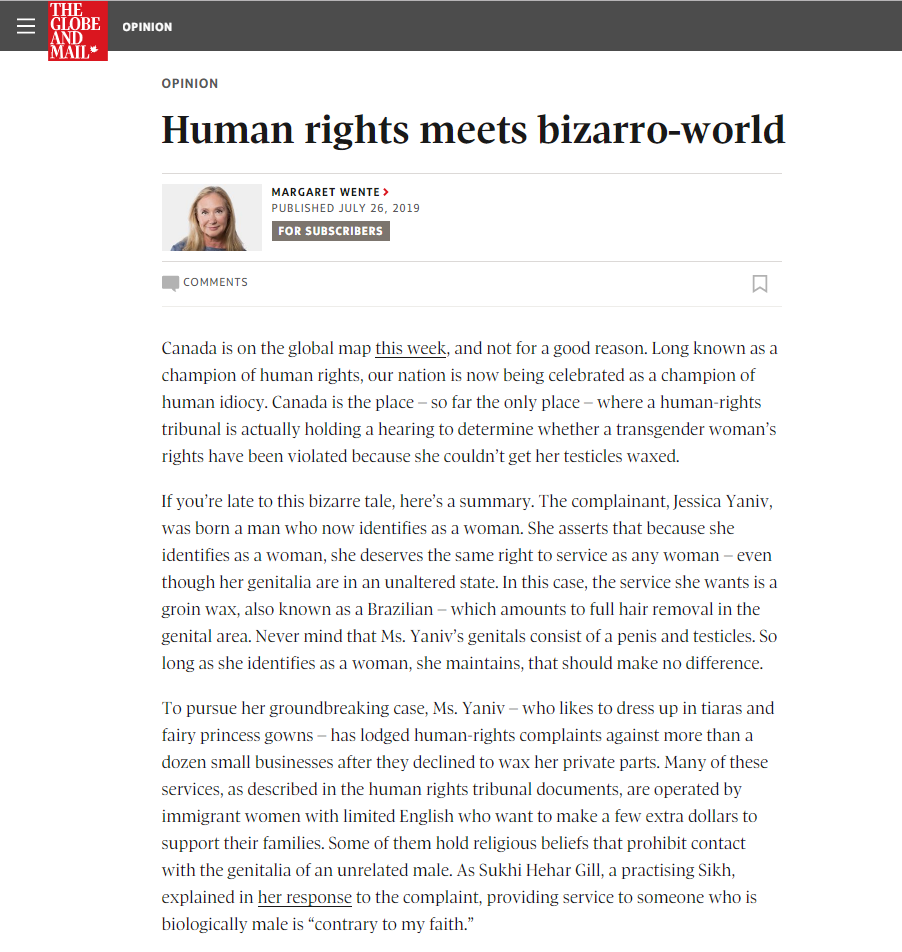
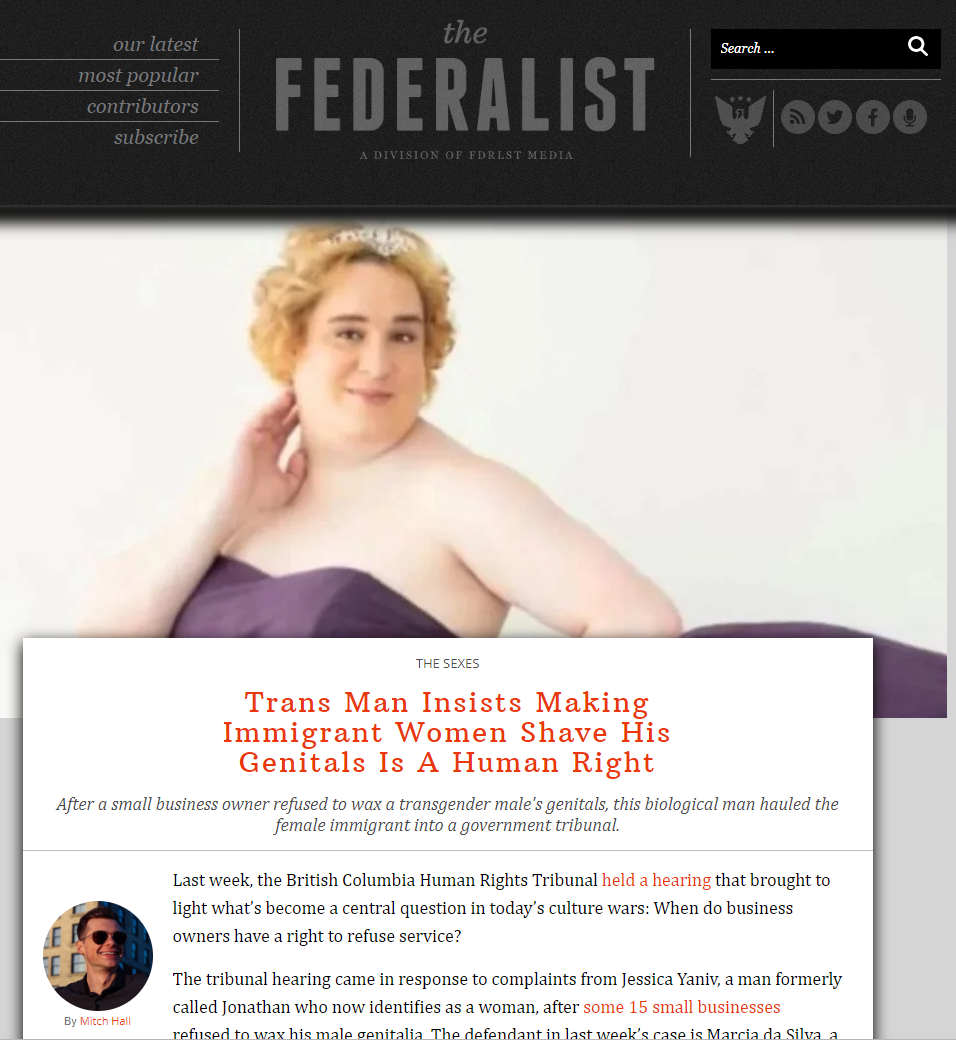
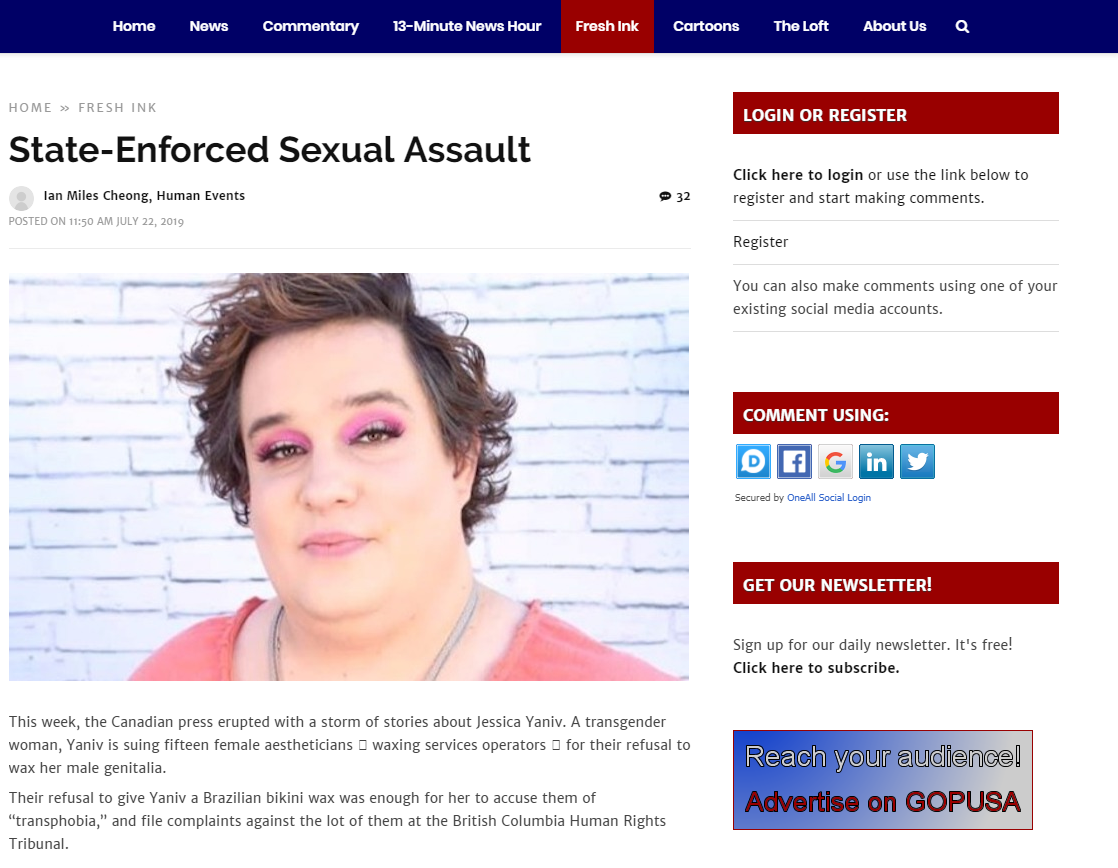
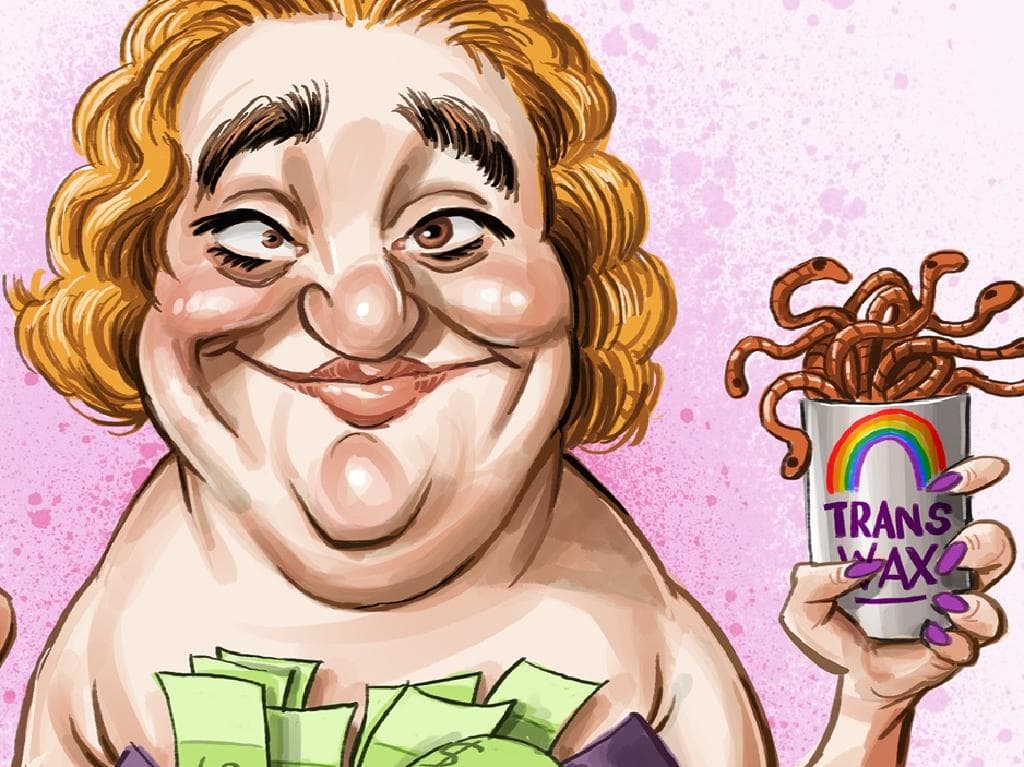
The language used by The National Post, The Globe and Mail, and the Sun about Yaniv have themes familiar to trans people: mockery, derision, and focus on genitalia. “Bizarro” declares the Globe and Mail, “laughing stock” says the National Post, “balls to that” headlines the Sun with its genitalia pun.
These news organisations abdicated their responsibility to give a measured analysis and chose to describe a living person with cruel and dehumanizing language. Their staff encouraged readers to ridicule and shame Jessica Yaniv.
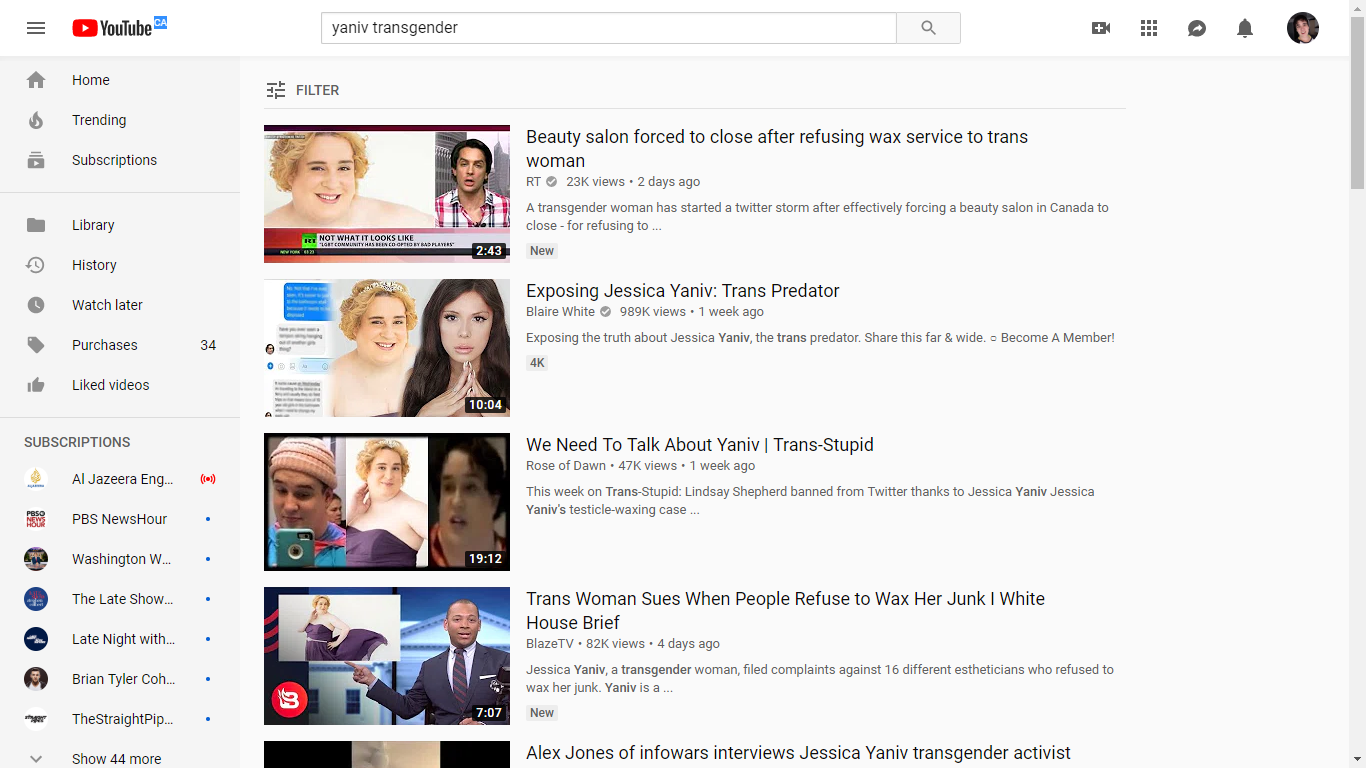
Meanwhile, on YouTube, the top results are all videos lambasting Jessica Yaniv:
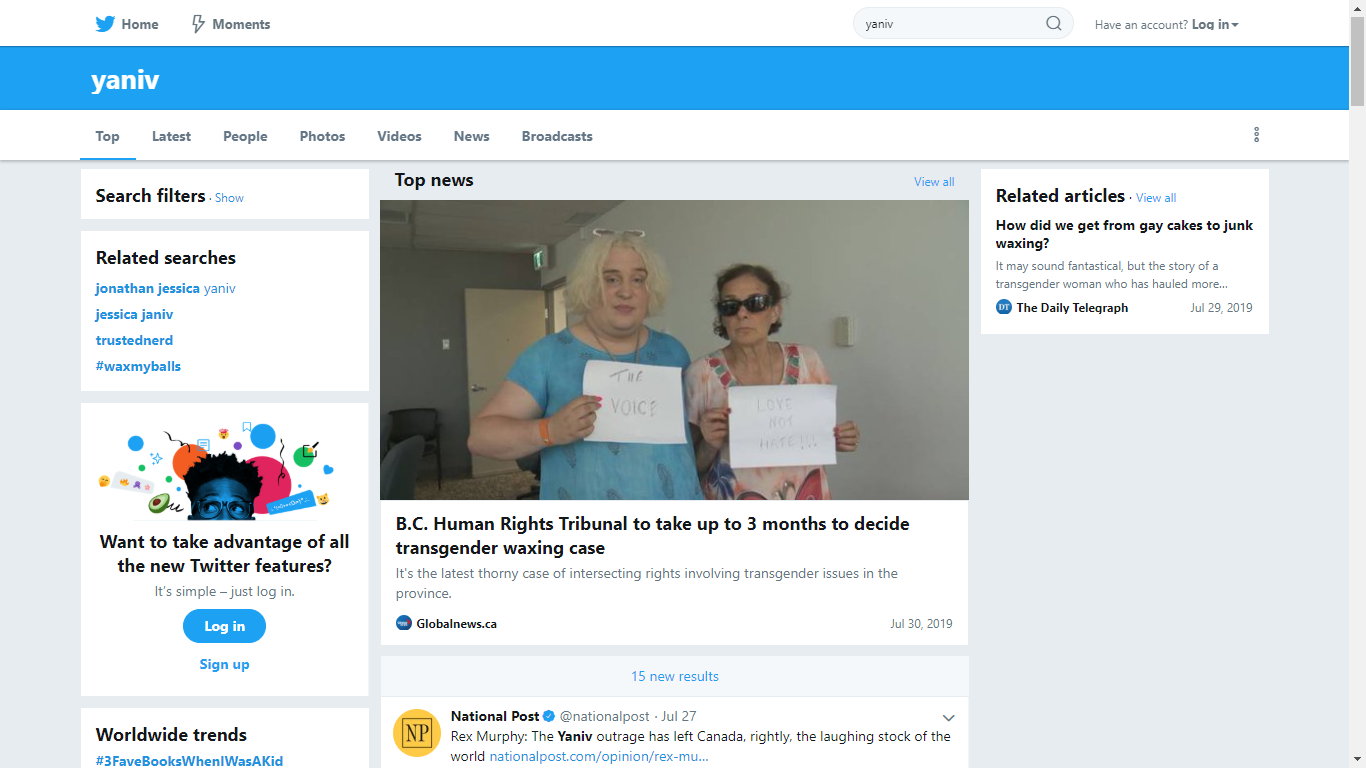
On Twitter the hashtag #waxmyballs is trending while a top result being the National Post’s article:
Keep in mind that this onslaught is all directed at a single individual. It’s a lot for any one person to endure. Yaniv has since received death threats in person. All this because she brought a case of discrimination before a tribunal after being denied service over a dozen times. It is a disproportionate response created by the worst impulses of individuals working for news publishers in Canada.
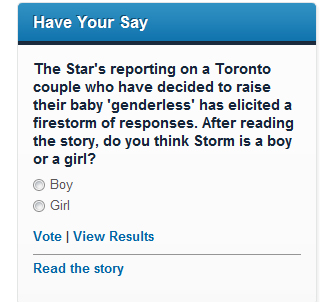
It is reminiscent of the furor a few years ago, where a Toronto family didn’t disclose gender of their child. The Canadian media found out and targeted the young family in a similarly cruel fashion, with the family then making international news, and receiving an overwhelming vitriolic response on social media.
When the Star first covered their decision, public outcry was fast and furious. People delivered angry letters to the family’s door. Drivers slowed to shout “Boy!” from their windows at Storm, as the family was en route to the pool or the library.
News organisations such as The Globe and Mail and National Post aren’t reporting on transphobia, they are active instigators of it. Their actions made the lives of the specific trans individuals they targeted hell.
Their writers show no empathy because gender diverse individuals are stand-ins for trans rights as a whole. The authors use these events as a conduit to communicate their dislike for the increasing acceptance of trans people. But for those queer and trans people whose names are used without their consent, it means having their young child yelled at by strangers on the street. It means receiving death threats on public transit. It means violence.
This has got to stop. It’s not just the authors who are accountable here, but the chain of cis people inside these news organisations who okay’ed their platform targeting these individuals with such vitriol. Who followed on by publishing more such pieces. Their platforms create movements that harass queer and trans people.
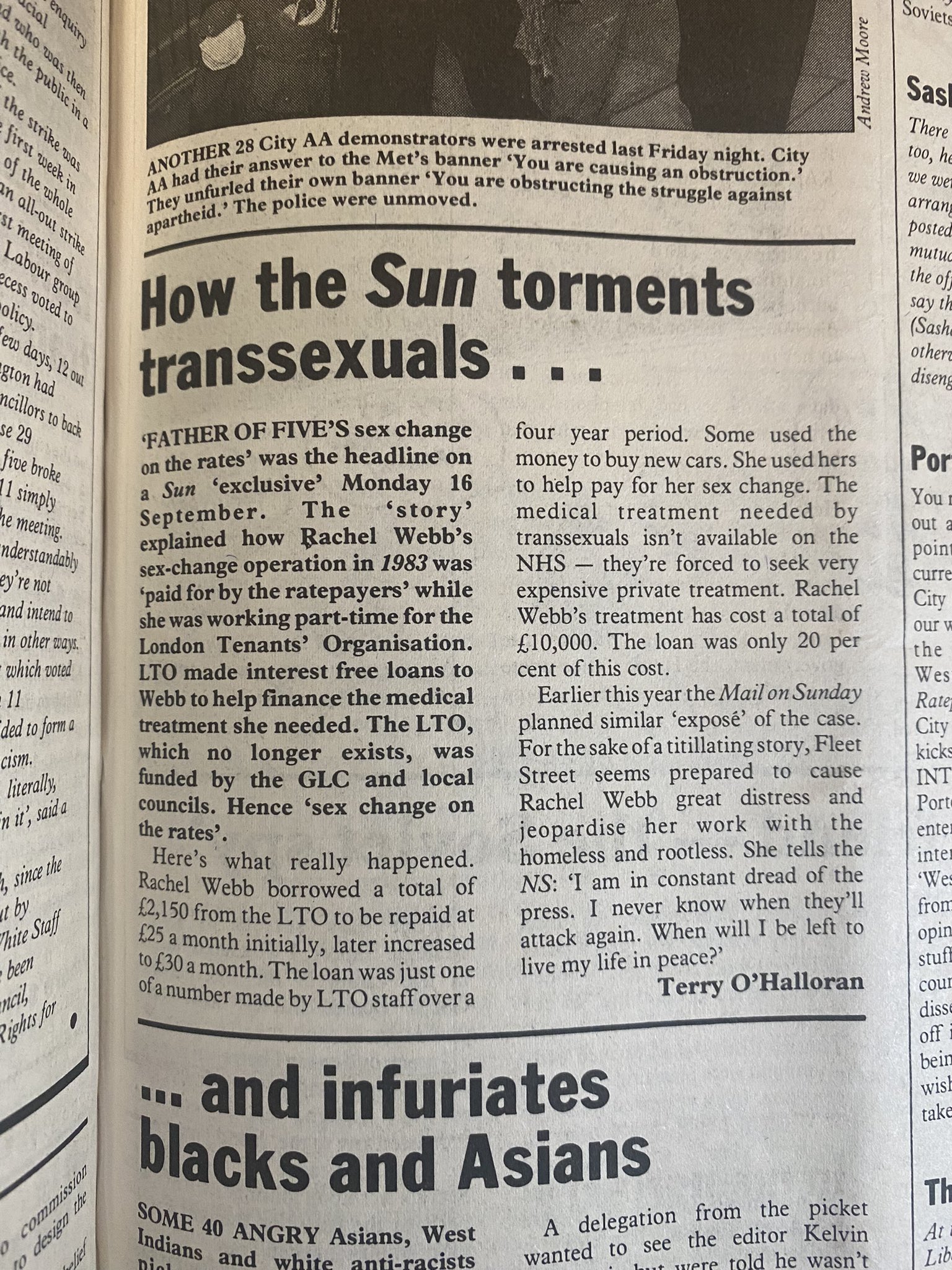
Media organizations targeting trans individuals has a long history.
There’s a pattern here. These organisations vilify gender diverse people whose existence or actions challenge norms, no matter how insignificant. How necessary was it for a news organisation in Britain to say that a newborn in Toronto was a “freak” because their gender wasn’t disclosed at birth?
Conversely these same organisations make martyrs of cisgender people who have been publicly challenged by trans people – the Jordan Petersons and Kenneth Zuckermans of the world. Much the same, these individuals are used as proxies to communicate the desire for the world to remain as it was: without cis people opening up spaces to gender diversity.
Companies that produce the Globe and Mail, National Post, and the Sun are generating ad revenue from their writers using this incendiary language. In the current social climate, this transphobia is profitable. But these organisations are culpable for the violence they have fostered, and their role needs to be openly recognized in our discourse. We must stop perceiving news organisation as neutral observers and recognize that society’s prejudice manifest there as it does everywhere.
This article has been updated to include events of the summer.
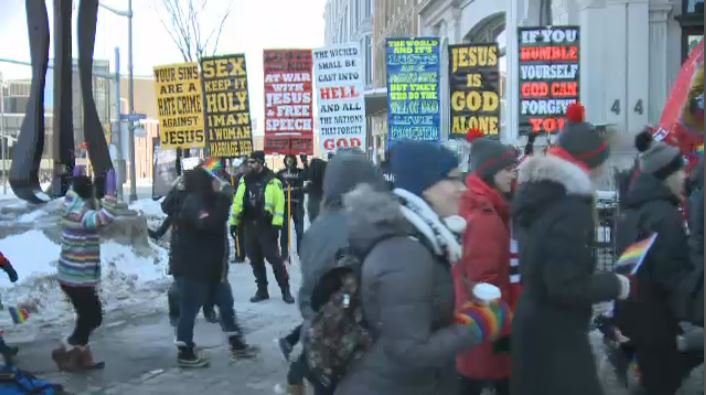
Since the late nineties, organized antagonists of gender and sexual minorities were largely Christians or affiliated with major conservative political parties. The dynamics have changed. In the past few years, there’s been a rise of nationalist groups across Canada and they have been inserting themselves in spaces created by these anti-gay and anti-trans voices. They are going to Pride with the intent to intimidate and harass gender and sexual minorities, as well as attending events that advocate to institutionalize the oppression of these minorities.
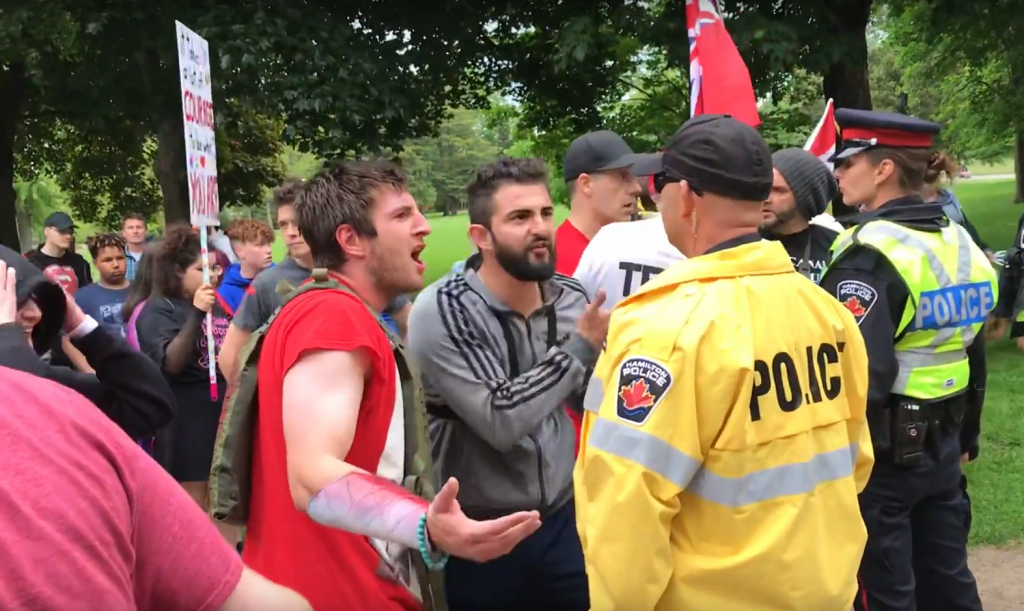
In June 2019, nationalists under the banner of Yellow Vest went to the Hamilton Pride event. Some had body armor. They joined up with the anti-gay Christians that had showed up to harass members of the gender and sexually diverse community. In response, queer people put up a black cloth fence and blew whistles to drown out the hateful rhetoric. The nationalists then attacked with punches.
Nationalists at Hamilton Pride 2019.
A week later in Toronto, men wearing shirts that said “Canadian Nationalist Party” and Christian t-shirts attacked people in the Eaton Centre during the Dyke March. The men were shouting anti-gay slurs and saying they were going to the gay village in Toronto. The timing isn’t a coincidence. One of the attackers in Toronto is the man seen with the body armor in the photo from the attack at Hamilton Pride above.
A man wearing a helmet with a shirt that says “Jesus Christ is King of Kings Lord of Lords” goes to punch a queer person in the Eaton Centre. The man behind him with the helmet and body armor is the same one pictured attacking people during Hamilton Pride.
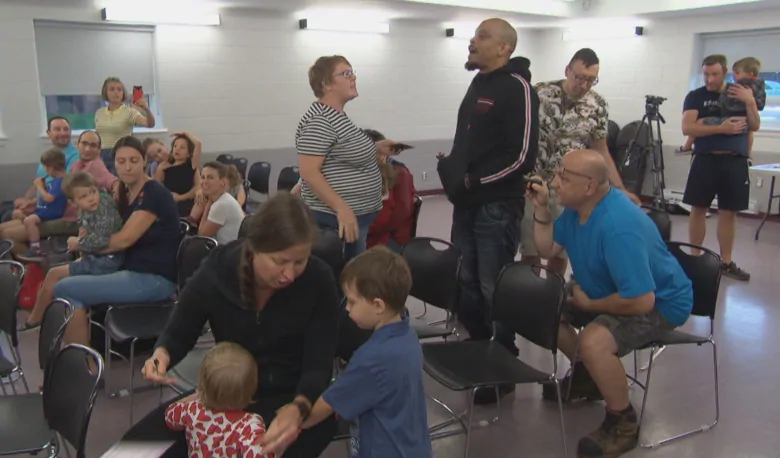
A homophobic preacher (black clothes, standing) and a Yellow Vest member (right, blue) harass children and young families at a Pride storytelling event in Ottawa.
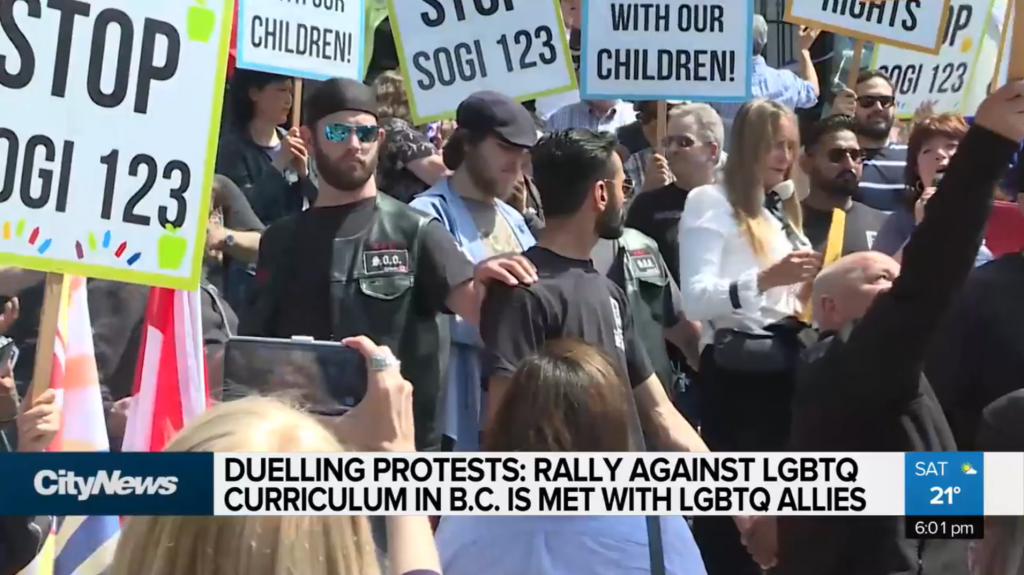
Meanwhile in June 2019, members of the Soldiers of Odin were front and center at an anti-trans rally in Vancouver. The Soldiers of Odin is an nationalist group founded by a self-declared neo-Nazi in Finland in 2015 and developed multiple chapters in Canada by the summer of 2016. The rally was to oppose SOGI 123 which is a set of policies, resources and curriculum to create welcoming schools for students with diverse sexual orientations and gender identities.
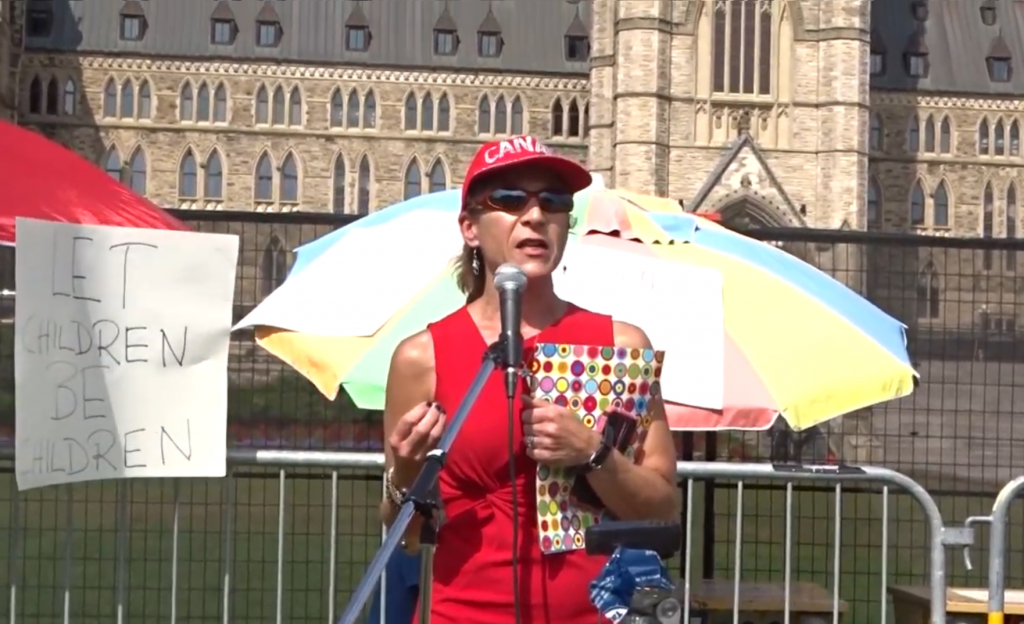
Soldiers of Odin visible by the “S.O.D.” patch at an anti-trans rally in Vancouver. The speaker to their right runs the website Transanity.
A member of the People’s Party uses a loud speaker to harass those attending a Pride flag raising in Surrey.
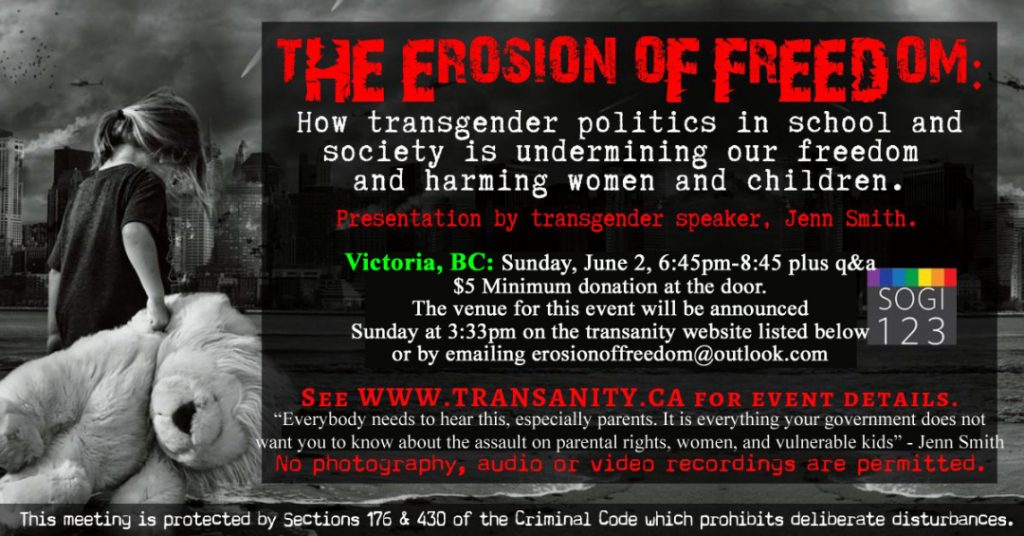
Then in May 2019 on Vancouver Island, the Soldiers of Odin attended the event “The Erosion of Freedom: How transgender politics in school and society is undermining our freedom and harming women and children”, to act as the body guards for its presenter.
An advertisement for the anti-trans event on its presenter’s website, Transsanity.
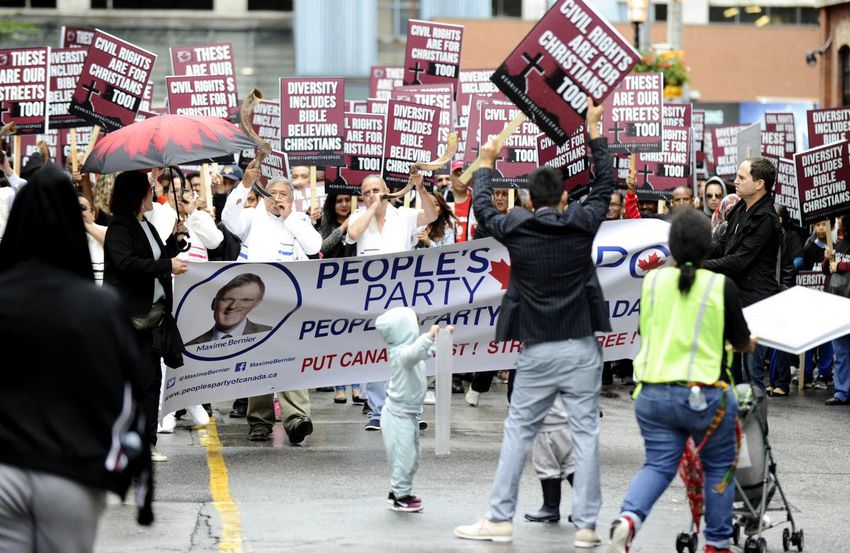
Anti-LGBTQ march in the heart of Toronto’s gay village, with a banner for the People’s Party at the front.
The introduction of nationalists in Canada is new and it makes the situation more hostile to gender and sexual minorities in attendance. But it’s not a radical departure from how things were already. Even without nationalists at their side, conservatives and Christians have been disrupting events intended for gender and sexual minorities. For Haldimand-Norfolk Pride, they installed themselves in front of the stage with a loudspeaker. In Ottawa, the same group protested WinterPride, while previously another individual disrupted a support group for parents of trans youth, and another bunch harassed families during a picnic at Pride.
Homophobic Christians disrupting the Haldimand-Norfolk Pride in May 2018. Note the handheld loudspeaker.
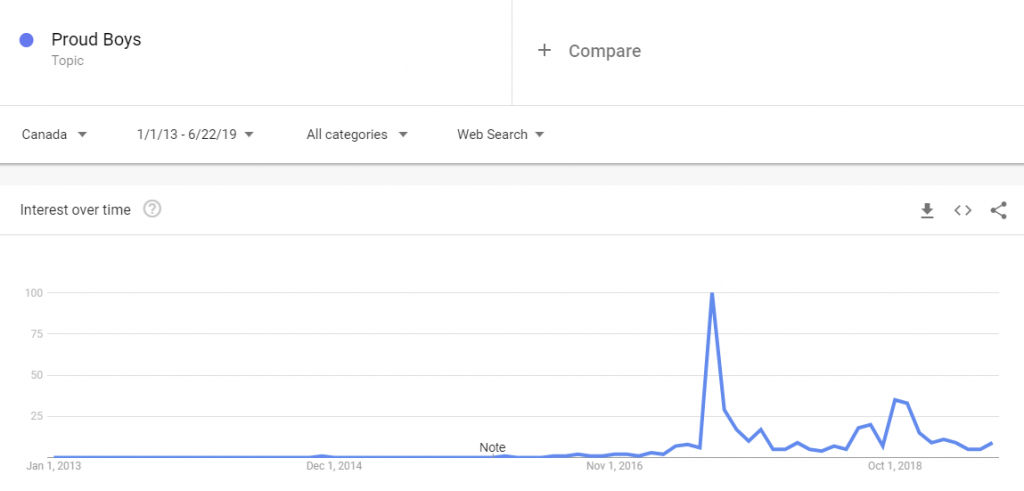
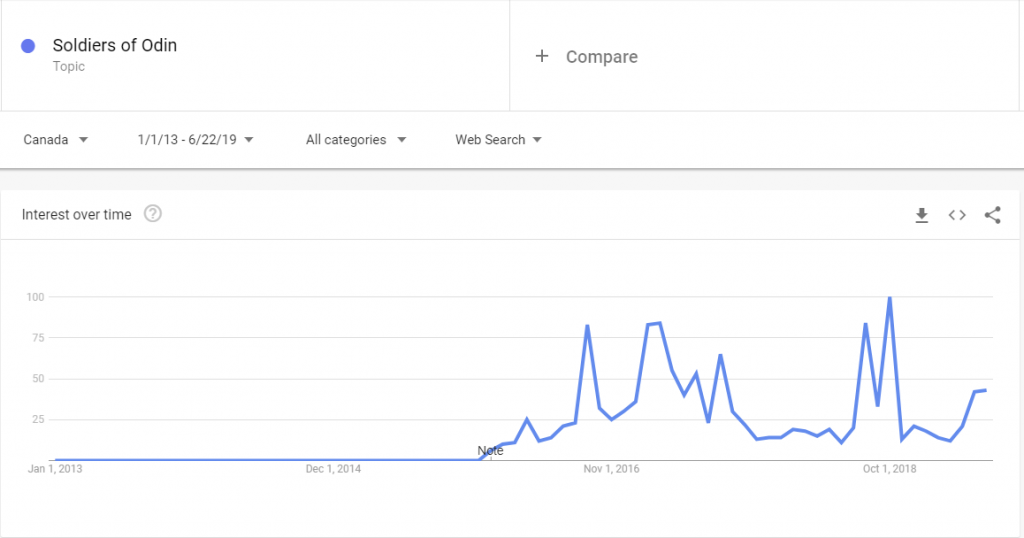
Google Trends indicates that interest in nationalist groups in Canada such as the Proud Boys and Soldiers of Odin started in the 2016-2017 time frame. This matches Donald Trump’s presidency and Trump hats were visible in both the Hamilton and Vancouver events mentioned at the start of this article. The Canadian Nationalist Party was founded in 2017. The People’s Party of Canada was founded in 2018.
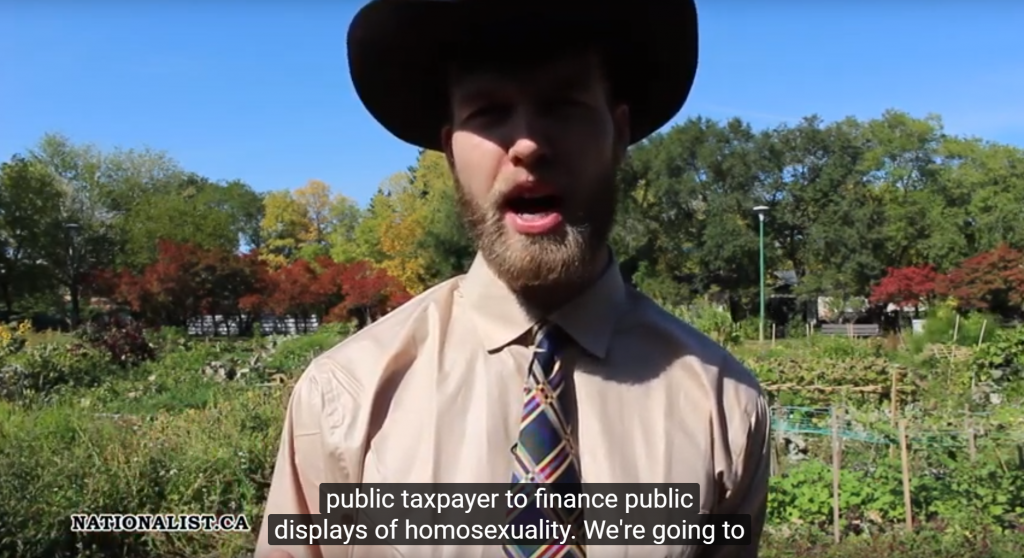
An official video from the Canadian Nationalist Party saying that being gay shouldn’t be normalized, same-sex marriage should be put to a referendum, and that Pride parades should be defunded.
Also keep in mind that it’s really only a small core group of antagonists at the heart of all of these events. It’s the same few nationalists that attacked people during the Toronto and Hamilton Pride events and that harassed children and young families at the Ottawa Pride event. It’s the same group of Christians that crashed Pride in Ottawa, Hamilton, Haldimand-Norfolk. It’s the same speaker at the anti-trans rally in Vancouver and who did anti-SOGI talks on Vancouver Island. These antagonists seem bigger than they are because they go to so many events and physically impose themselves. But at the end of the day, they are a fringe group vastly outnumbered by the gender and sexual minorities they are harassing.
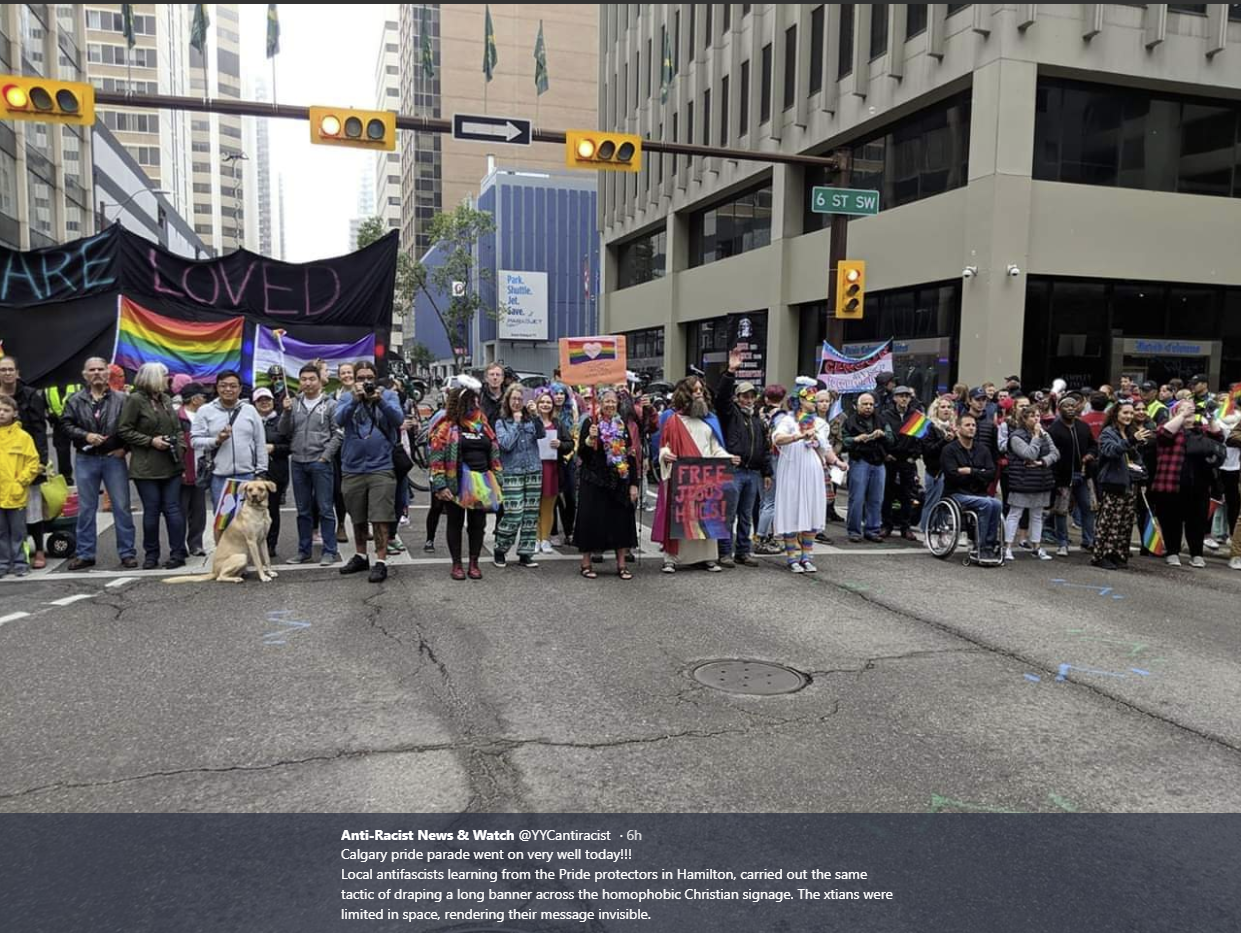
Still, this doesn’t negate the harm they are able to accomplish. There needs to be an organized response to protect those who attend the events with a focus on minimizing the impact on the participants. This means blocking harmful messaging and discouraging conflict escalation. To that end, The 519’s mobilization kit is a welcome initiative, as was the noise makers and cloth wall seen used at Hamilton Pride. Calgary Pride is an example of the tactics learned from Hamilton in action.
Twitter post from Calgary Pride.
There also, however, needs to be a response on behalf of the media and politicians. In particular, they must acknowledge that this white Christian nationalist moment is harmful. Gender and sexual minorities shouldn’t have to be alone in this. They must also recognize that giving these white nationalists a platform is a choice that bridges the gap to the mainstream.
June is Pride month, and both federal conservative leaders in Canada and the US have used this as an opportunity to claim support for LGBT/LGBTQ people.
The spokesman for Conservative leader Andrew Scheer stated this week:
“Canada’s Conservatives have a proud history of fighting for the rights and protection of all Canadians, including those in the LGBTQ community, at home and abroad. There are many ways to support these communities, and it is vital that the rights all Canadians are protected regardless of race, gender or sexual preference,” said Scheer spokesman Daniel Schow.
As we celebrate LGBT Pride Month and recognize the outstanding contributions LGBT people have made to our great Nation, let us also stand in solidarity with the many LGBT people who live in dozens of countries worldwide that punish, imprison, or even execute individuals on the basis of their sexual orientation. My Administration has launched a global campaign to decriminalize homosexuality and invite all nations to join us in this effort!
Both assert they support these communities, yet their actions speak differently. For the Conservatives in Canada:
2010: Almost all Conservatrives vote against adding gender identity and gender expression to the Canadian Human Rights Act with Bill C-389. This include Scheer.
2011: Almost all Conservatives vote against adding gender identity and gender expression to the Canadian Human Rights Act with Bill C-389. Scheer does not vote.
2012: Almost all Conservatives vote against adding gender identity and gender expression to the Canadian Human Rights Act with Bill C-279. Scheer does not vote.
2013: Almost all Conservatives vote against adding gender identity and gender expression to the Canadian Human Rights Act with Bill C-279. Scheer does not vote.
2017: Removes guidance protecting trans students under Title IX.
2017: Justice Department abandons its lawsuit against North Carolina’s anti-trans law.
2017: Trump announces on Twitter he’ll ban all trans people from serving in the military.
2017: Staff at the Centers for Disease Control and Prevention are instructed not to use the word “transgender”.
2018: Department of Health and Human Service propose a rule to encourage medical providers to deny service on the grounds of religious freedom. This is coded language for denying service to women, gay, and trans individuals.
2018: Bureau of Prisons roll back protections for trans inmates.
2018: Department of Labor releases a new directive no longer requiring federal contractors to comply with nondiscrimination laws on the grounds of religious freedom. This is coded language for denying service to women, gay, and trans individuals.
2019: Department of Health allows adoption and foster agencies in South Carolina to discriminate against LGBT caregivers.
2019: Ban on trans service members goes into effect.
2019: Trump announces opposition to Equality Act, which would add protections for LGBTQ Americans and others.
2019: Department of Health and Human Services proposes a rule that would remove all recognition of all nondiscrimination laws intended to protect trans individuals.
So what’s going on here? The hint can be found in the message on Trump’s official Twitter account focusing on abroad. The same is true of Scheer, with his spokesperson explaining:
Schow pointed out more-recent examples of Scheer’s advocacy for members of the community. In June 2017 Scheer moved a motion in the House of Commons that, among other things, condemned the actions of Vladimir Putin’s Russian government against LGBTQ individuals.
The Canadian and US government use human rights as a tool against countries that undermine their foreign policy objectives. This is why the Canadian and US governments vocally criticize Iran on the basis of human rights, but are quiet on more repressive Saudi Arabia. Since gay rights is fashionable, they’re using that. There’s a word for this: homonationalism.
These conservative leaders do not recognize their role in encouraging prejudice in their home countries. For them discrimination is a thing of the distant past, or that happens in isolated incidents, or that occurs abroad, or in the case of transphobia – is seen as just. Scheer had an opportunity to confront his party’s opposition to these rights. It would have been a moment of humility and introspection, acknowledging how good people ended up advocating to hurt so many. Such a party would be less likely to advocate against the rights of minorities in the future.
Scheer has chosen not to take these hard steps, and instead misrepresent recent history as one in which the Conservative party supported the rights of sexual and gender diverse people. Now he’s using the same individuals he publicly maligned for years as a tool to promote his foreign policy. An entirely expected, but nonetheless unfortunate, development.
The denial to the U.S. Embassy in Berlin is particularly jarring because the ambassador to Germany, Richard Grenell, is spearheading an administration push to end the criminalization of homosexuality in roughly 70 countries that still outlaw it, as NBC News first reported in February. Grenell, the most senior openly gay person in Trump’s administration, has secured support for that campaign from both Trump and Vice President Mike Pence.
The purported support of LGBT rights abroad is not genuine for neither Trump nor Scheer.
Ten years ago, I wrote a blog post where I talked about my focus shifting to queer and trans issues. I was ignorant at the time, and spent the next decade unlearning, and growing. I’ve reached another inflection point in my life where I’m exhausted and am now stepping away from this work.
I wrote that first blog post in my early twenties. I’m in my early thirties now and there’s a cohort of queers a full generation younger than me. They are freshly traumatized with newly acquired vocabulary validating the wrongs they previously couldn’t name. They have an outsider’s perspective which lets them be incensed at injustice in a way that gets lost with better knowing the institutions that produce them. They are more inclusive than we were at their age, although still quite exclusive, and favour immediacy. They aspire for big picture changes.
They need space to go through the experiences we went through and grow. I need space from that type of advocacy and its unbridled anger, all-or-nothing approach, selective dependability, clique based on desirability, and relationship turmoil. The older queers I know have pivoted from system-level change to working at a smaller scale, where their impact is immediately felt, and started doing so in a professional capacity. They are social workers, nurses, union reps, librarians, executive directors, and academics. Their activism is intertwined with their jobs.
I don’t have one of these occupations, nor am I a user of services, and this makes me an outsider. We don’t need more people like me. We need insiders. It takes insiders for things to change in the small measures necessary to transform the social landscape. It takes insiders at Health Canada and Blood Services Canada to end the ban on blood donations from gay men and trans women. It takes insiders in the Ministry of Health to stop denying coverage for reproductive care to pregnant trans men. It takes insiders in LGBT community organizations across Ottawa to stop excluding services to francophone newcomers. It takes insiders at retirement homes and their corporations to make elderly gay people from going back in the closet. It takes insiders in Catholic schools to stop the messaging that queer and trans youth are unwanted. It takes insiders in research positions at universities to ask the right questions to change policy discourse. It takes insiders to make the little changes everywhere. At this point in my life, there’s not really a place for me and I want to use the energy I’ve been investing in others to work on my own growth.
A great many things have happened in the past ten years to be more inclusive of queer and trans people though these gains have been imbalanced towards white, settler, and affluent individuals. Some things, however, remain much the same. Housing needs to be a right, sex work needs to be seen as work, education needs to be affordable, mental health care covered by the province, jobs accessible, and basic income guaranteed. A lot of trans people are still dying in Ottawa and communities across Canada and they don’t always look like the packaged-for-cis-audiences trans narratives on television. Things are not okay. There was a funeral this weekend. But I can’t do this anymore.
I conclude with two observations I’ve made a decade apart about the nature of prejudice to show that it, or perhaps I, haven’t changed that much. Here from a piece I wrote ten years ago about opponents of equality for gay people:
It’s hard to understand those that sit on the other side of the fence. An emotion that could easily be confused for hate fuels these people. They subscribe to inducing great torment, and yet are completely uncaring of this fact. It’s a particularly dangerous human state, one which is passive, and doesn’t involve violence nor rage. After all, these are rational people, behaving in a calm intelligent manner. Yet, in this one aspect of their livelihoods, they are able to commit themselves to such vast societal destruction.
In the end, a lot of prejudice isn’t fueled by hate, but by discomfort, and only with vulnerability can it be addressed meaningfully. Though discomfort is more innocuous-sounding than hate, actions (or lack thereof) rooted in discomfort can be indistinguishable in their cruelty and harm done to those motivated by hate.